In one of the deadliest attacks in recent years, a suicide bomber killed at least 31 people at a Shiite mosque in Islamabad, Pakistan, during Friday prayers.
Officials reported that nearly 170 worshippers were injured in the attack at the Khadija Tul Kubra Imambargah mosque in Tarlai, on the outskirts of the capital. Friday prayers are typically attended by large numbers of worshippers in mosques worldwide.
Video footage from the scene showed bodies strewn across the mosque and dozens of injured worshippers lying in the mosque courtyard.
“A total of 31 people have died. The number of wounded sent to hospitals has reached 169,” said Irfan Memon, a senior government official.
Eyewitness Aun Shah described the attack, saying two assailants first shot the mosque’s security guards before approaching the entrance.
“As soon as they reached the mosque door, one of them detonated the explosives,” Shah told Radio Mashaal of Radio Free Europe/Radio Liberty.
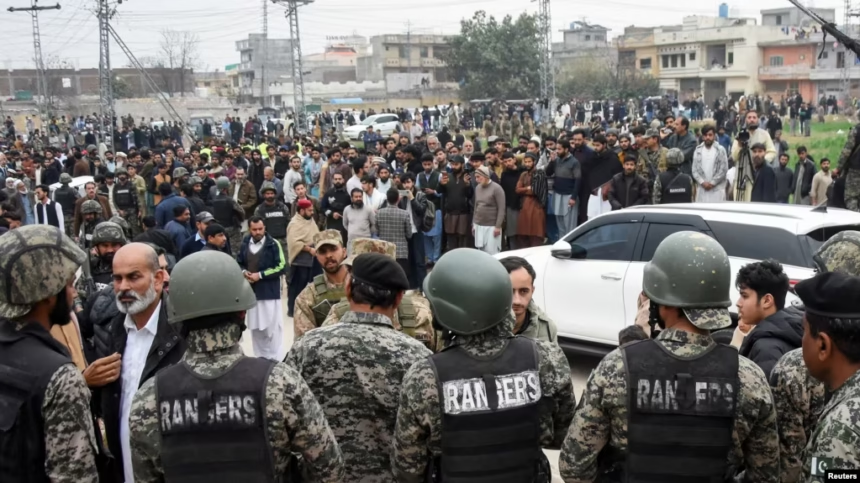
Following the attack, some worshippers protested outside the mosque, criticizing the government for failing to prevent rising terrorist attacks.
While attacks in Islamabad are rare due to increased security measures, Pakistan’s northwestern Khyber Pakhtunkhwa province and southwestern Balochistan province have increasingly experienced Islamist violence and separatist insurgencies, with clashes involving Pakistani security forces, local Taliban factions, and Baloch nationalist groups.
No group has claimed responsibility for the attack, but conflict monitors at ACLED noted that the incident resembles attacks carried out by the Islamic State, which described the February 6 attack as the deadliest in Islamabad in a decade.
Pakistan, with a population of 240 million, is predominantly Sunni Muslim, with Shiites comprising around 15% of the population. Since the 1980s, sectarian violence has claimed thousands of lives, with Shiite communities often targeted by extremist Sunni militants.