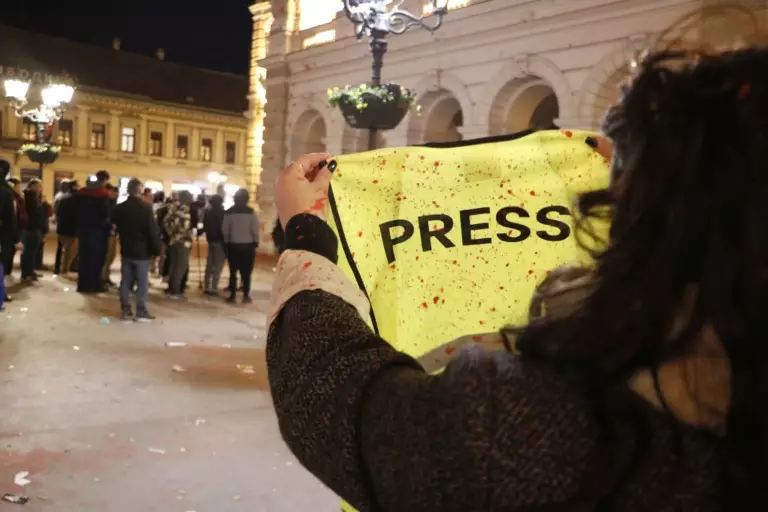
Reporting on student and other protests that began in November 2024 has exposed the Serbian government’s readiness to respond to journalists with physical force and intimidation, according to a new report by Reporters Without Borders (RSF).
While Serbia has not experienced journalist killings or kidnappings like some other countries, the RSF report records 91 physical attacks on journalists in 2025 alone. Alarmingly, half of these attacks were carried out by police officers, and none of the perpetrators have faced punishment or accountability.
“The report reflects the true state of freedom of expression and media in Serbia,” says Rade Đurić, lawyer at the Independent Journalists’ Association of Serbia (NUNS).
A Systemic Problem
RSF highlights that Serbia’s political and social climate, fueled from the top, targets journalists directly and promotes hostility toward independent media. The report notes that the highest government officials are effectively generators of violence, while the police, heavily influenced by the executive branch, have become a primary tool for intimidating journalists.
Đurić explains that this has a chilling effect on young reporters, with physical attacks and detentions carried out without accountability, sending a clear signal that threats and intimidation are tolerated.
Global Context and Serbia’s Place
RSF also included a list of “media freedom predators” for 2025, which features authoritarian and semi-authoritarian leaders, including Xi Jinping, Vladimir Putin, Mohamed bin Salman, and notably, Serbian President Aleksandar Vučić. Vučić was included due to 89 attacks on journalists during various protests since November 2024.
The European Parliament has also criticized Vučić’s regime, highlighting physical violence against journalists, propaganda campaigns, and smear campaigns orchestrated by pro-government media and supporters.
Despite a slight improvement in Serbia’s ranking on RSF’s World Press Freedom Index—from 98th to 96th place—experts warn this is illusory. The apparent improvement reflects deterioration in media freedom in neighboring countries rather than real progress in Serbia. The situation remains critical, with political pressures, threats, and attacks continuing to undermine independent journalism.
“The government’s behavior seems designed to intimidate journalists into stopping their reporting,” says Đurić.
In regional comparison, only Kosovo ranks lower than Serbia in media freedom, highlighting the ongoing risks faced by journalists in the Western Balkans.