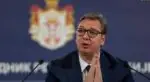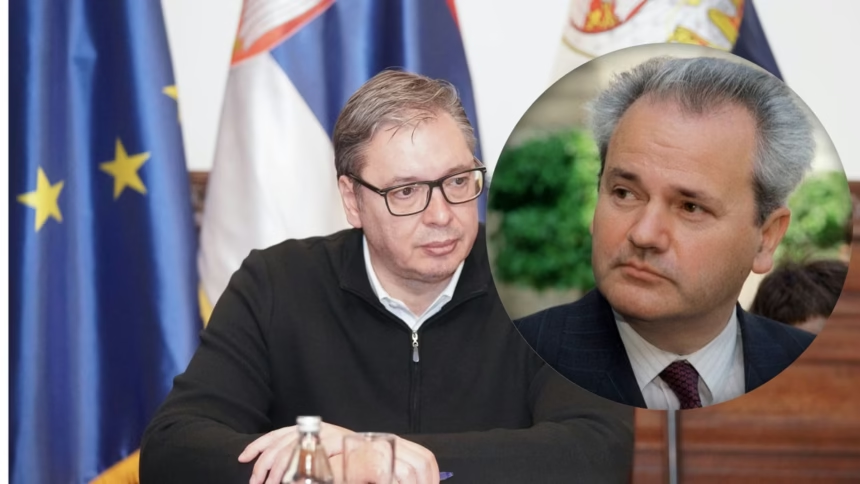
The Austrian newspaper OE24 (Österreich 24) reports that while mass protests shake Serbia, President Aleksandar Vučić is pushing forward with sweeping power grabs, tightening his control over both the military and the police—in a manner strikingly reminiscent of Slobodan Milošević’s 1990s rule.
According to the report, Vučić is advancing legal changes that would officially declare him the supreme commander of Serbia’s armed forces. Currently, under the existing law, the president is not even mentioned in that role.
“The amendment, expected to be passed soon, would require the Chief of the General Staff and key officers to run the armed forces according to the law and the president’s orders,” OE24 writes.
But the power consolidation does not stop with the army.
OE24 notes that the latest personnel purges and promotions in the police indicate that the entire security apparatus is being placed under Vučić’s absolute control.
The Belgrade weekly Radar is quoted saying that Serbia is “nearly at the end of a decade-long path of turning the police into a branch office of the Serbian Progressive Party”, a process that began in 2014. According to Radar, professionalism is no longer even being faked—the changes simply reflect Vučić’s personal wishes.
One example is Marko Kričak, the controversial commander of the special security unit, reportedly set for promotion despite a record of brutality toward protesting students.
Military analyst Aleksandar Radić warns that these legal changes amount to “a return to the 1990s”, when the Yugoslav Army was subordinated to Slobodan Milošević.
Retired general Momir Stojanović calls the amendment “absurd” for a country that supposedly operates under a parliamentary system.
But, as OE24 concludes:
“Perhaps Serbia is a parliamentary democracy only on paper. Most citizens already know no decision can be made without the president’s blessing.”