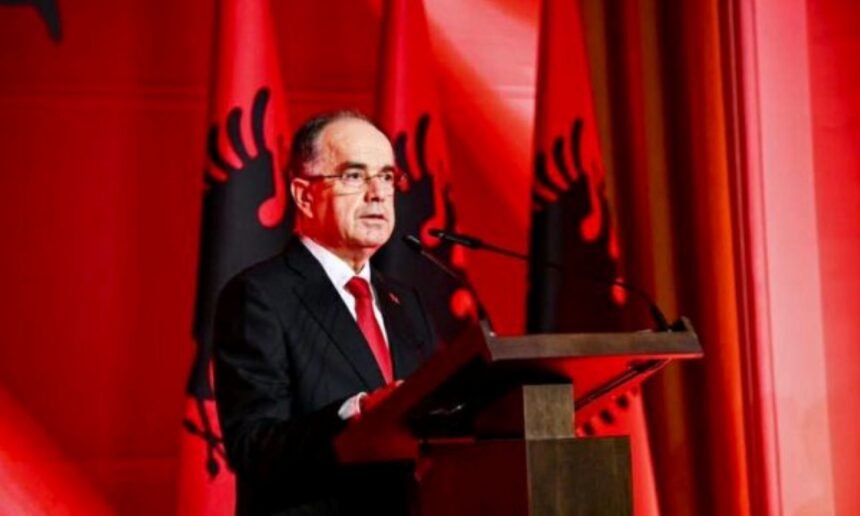
At the 50th anniversary ceremony of the Kosovo Academy of Sciences and Arts (KASA), Albanian President Bajram Begaj praised the institution’s historic contribution to knowledge, national identity, and the protection of the Albanian language during periods of intense repression.
Begaj said the event marked “half a century of knowledge, sacrifice, and intellectual, civic and national dedication.”
“Born in Difficulty, Raised to the Height of European Academies”
Speaking at the celebration in Prishtina, Begaj emphasized that KASA emerged under harsh political conditions, yet managed to rise to the level of esteemed academic institutions in developed nations.
“Kosovo has long been a land of precious intellectual heritage, even before this building and this Academy took the form they have today,” Begaj stated.
A Patriotic Mission During Repression
The Albanian President highlighted the Academy’s role during the most difficult decades for Kosovo Albanians, when intellectual life was systematically suppressed by the Yugoslav and Serbian state apparatus.
“In the hardest times, the Academy and Kosovo’s intellectuals played a patriotic role,” Begaj said.
“They defended the language, history, and Albanian identity when they were directly threatened. Their patriotism was expressed not through grand words, but through tireless scholarly work, courageous creativity, and the insistence on telling the truth.”
Kosovo’s History: Not One of Free Institutions
Begaj stressed that the history of Kosovo Albanians is a story of “deliberate obstacles and political and social restrictions, imposed by a brutal, repressive and criminal system that aimed to halt every cultural, scientific and national expression.”
He added that the harsher the repression became, the stronger the response of Kosovo’s intellectual elite grew.
Two Albanian States, Two Academies Serving One Nation
Reflecting on the present, Begaj said that Albanians today live in a historically unprecedented moment:
“We have two Albanian states and two national academies serving one nation. For the first time in our history, Albanian scholarship can develop freely, without obstruction, in full cooperation.”
He credited this progress to the long struggle of Kosovo Albanians as well as the support of the United States and European partners.
Knowledge as the Driving Force for the Future
Begaj closed by emphasizing that Albania and Kosovo must now transform their accumulated knowledge into a force for societal development, innovation, and national progress.
“The past has taught us the value of knowledge, and the future demands that we turn this knowledge into power for our society,” Begaj concluded.