Belgium on Wednesday rejected a plan to use frozen Russian assets to support Ukraine’s economy and war effort over the next two years, warning that the scheme carries major financial and legal risks.
According to foreign media, Ukraine’s budgetary and military needs for 2026 and 2027 are estimated at around €130 billion ($150 billion), while the European Union has pledged to cover the gap. So far, the bloc has provided more than €170 billion ($197 billion) since the start of the war in 2022.
A large portion of the potential funds would come from frozen Russian assets. Most of these assets are held in Belgium — roughly €194 billion ($226 billion) as of June — with the rest located outside the EU in Japan (around $50 billion), as well as in the United States, the United Kingdom, and Canada in smaller amounts.
The European Commission was expected to unveil details of the proposal on Wednesday, outlining the use of these frozen funds as collateral for a “compensation loan” aimed at meeting Ukraine’s urgent needs.
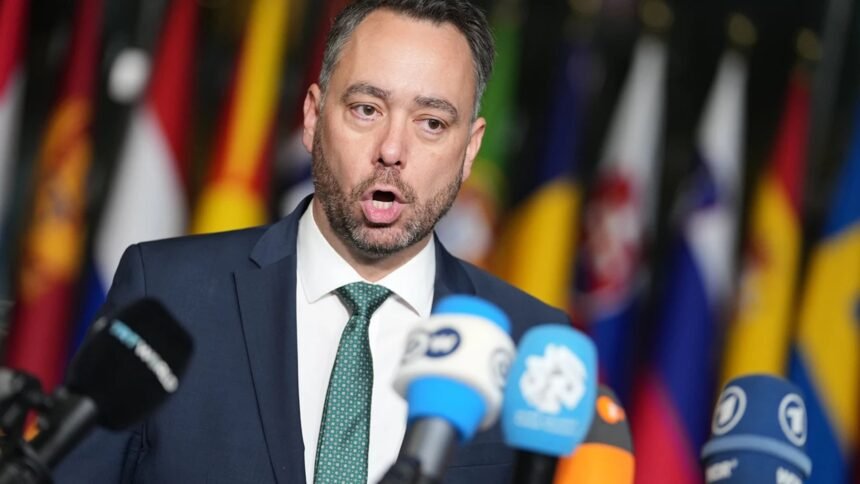
However, Belgian Foreign Minister Maxime Prévot stated that Belgium views “the compensation-loan option as the worst of all, because it is dangerous. It has never been done before.” Russia, meanwhile, has labeled the scheme “theft.”
Speaking hesitantly as he read the statement to reporters at NATO headquarters in Brussels, Prévot urged the EU to instead turn to international markets to raise funds for Ukraine.
“It is a familiar, powerful and well-established option with predictable parameters,” he emphasized.
“The compensation-loan scheme carries significant economic, financial, and legal risks,” the Belgian minister added, stressing that the Commission’s proposal does not address his government’s concerns. “It is unacceptable to use the funds and leave us alone facing the risks.”
Belgium fears that Euroclear — the Brussels-based company holding the frozen assets — could take legal action if Russia contests the use of the funds or if the scheme harms its reputation and business interests.