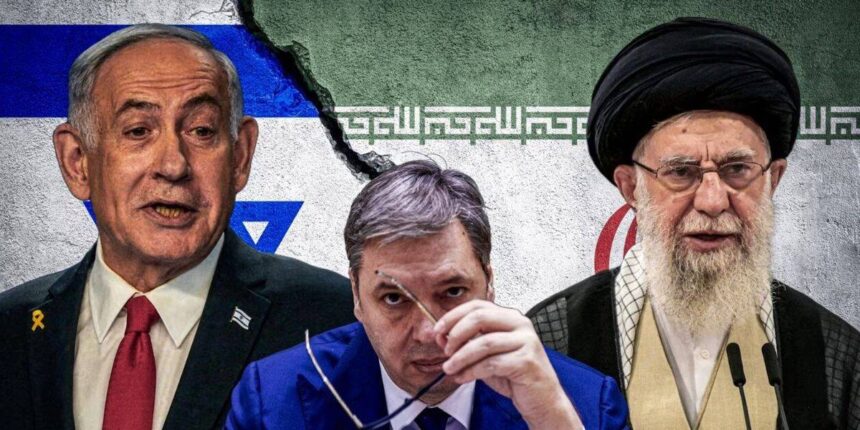
Serbia’s leadership has sent contrasting signals regarding the recent U.S.–Israeli strikes on Iran, reflecting the country’s delicate balancing act between historical memory and strategic autonomy.
President Aleksandar Vučić initially compared the strikes to NATO’s 1999 intervention in Yugoslavia, framing them as a form of regime change and highlighting a perceived dominance of the “law of might” over international law. Vučić also announced plans to accelerate military procurement, including advanced air defense systems, emphasizing Serbia’s need to protect itself amid global power shifts.
Shortly thereafter, Foreign Minister Marko Đurić condemned Iran’s attacks on the United Arab Emirates, Qatar, Bahrain, Kuwait, and Saudi Arabia, emphasizing regional stability and de-escalation. The statement was rapidly amplified by Richard Grenell, signaling alignment with U.S. positions.
Analysts note that the sequence of messages illustrates Serbia’s careful balancing act: criticizing Western interventions while reassuring Gulf states and Washington of its commitment to stability. Critics argue that inconsistent application of sovereignty principles may weaken Serbia’s credibility in international relations.
Serbia’s approach reflects its broader strategy of strategic autonomy, balancing relationships with Brussels, Washington, Moscow, Beijing, and Gulf nations. However, experts caution that oscillation between domestic political messaging and international positioning can undermine trust and complicate strategic partnerships.
While the clarification mitigates immediate diplomatic tension, observers say it raises questions about whether Serbia’s rhetoric reflects a coherent doctrine or ad hoc adjustment. As the region navigates escalating geopolitical crises, the consistency of Belgrade’s foreign policy will remain closely monitored by international partners.