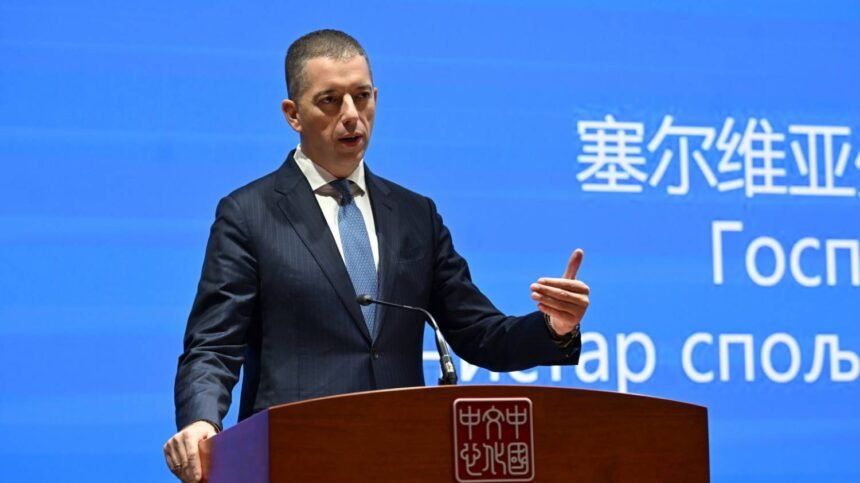
Serbia’s foreign minister, Marko Đurić, opened a China–Serbia youth cultural camp, presenting the bilateral relationship as values-neutral, culturally driven, and youth-focused. The partnership was framed as an investment in education and future generations rather than a strategic or geopolitical choice.
Strategic Partnership Presented as Apolitical
While Serbia emphasizes culture and youth in its China engagement, the relationship functions as a strategic hedge, allowing Belgrade to diversify international partnerships and reduce reliance on Western conditionality. The deliberate framing sanitizes the strategic dimension of the partnership, obscuring Beijing’s view of these ties as long-term positioning rather than episodic cultural exchange.
Ideological Signaling Embedded in Language
Common phrases like “steel friendship,” “shared future in a new era,” and “highest level of cooperation” are drawn from Xi Jinping-era discourse. These are not mere diplomatic flourishes but signals of ideological proximity. For U.S. policymakers, unexamined repetition risks blurring diplomacy and ideological alignment.
Culture and Youth as Influence Vectors
China systematically invests in education, culture, and people-to-people programs as tools of long-term influence. Portraying such initiatives as politically neutral misreads their function: cultural diplomacy is a layer of statecraft and a vector of soft power.
Implications for the U.S. and Allies
The concern is not Serbia maintaining ties with China, but the deliberate narrowing of the narrative. By framing strategic alignment as culture, Belgrade’s messaging risks strategic miscalculation in the context of intensifying U.S.–China competition.