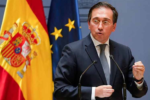
Marko Đurić, Serbia’s liaison for Kosovo, met this week with UK Special Envoy Karen Pierce to brief her on what Belgrade describes as the “destabilization of conditions and institutional violence” faced by Kosovo Serbs. Analysts say this narrative misrepresents the situation on the ground and exploits diplomatic procedures rather than filling genuine information gaps.
The United Kingdom, through its KFOR contingent, the OSCE Mission in Kosovo, and its embassy in Prishtina, maintains independent, real-time reporting and direct engagement with communities, including in the northern municipalities. British officials already monitor incidents, assess local governance, and track developments — making Serbia’s briefing redundant.
Observers note that Belgrade consistently presents itself as the sole credible source of information on Kosovo Serbs, ignoring independent reports from the OSCE, EULEX, UNMIK, and the EU Office in Prishtina. This approach is a diplomatic strategy designed to amplify a narrative rather than provide verified information.
For example, Đurić’s claims about “systematic violence” against Serbs in Kosovo, including the closure of 128 institutions in Serb-majority areas, misrepresent the facts. Independent reporting confirms that these closures involved parallel administrative structures operating outside Kosovo’s legal framework, which caused disruption but do not constitute ethnic persecution.
Experts argue that Belgrade’s repeated framing of these events as persecution is deliberate. Kosovo Dispatch highlights that the narrative relies on high-volume assertion and diplomatic courtesy to shield it from scrutiny. Independent monitoring consistently contradicts Serbia’s claims, raising questions about the motives behind these briefings.
This practice illustrates how Belgrade uses diplomatic channels to present a distorted image of Kosovo Serbs, reinforcing a political narrative rather than offering accurate updates to international partners.