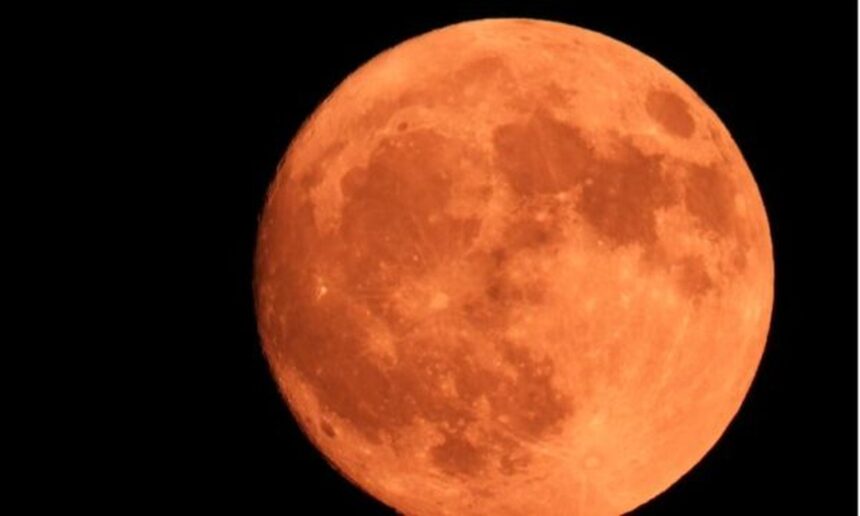
Tonight, March 3, a total lunar eclipse, commonly known as a “Blood Moon,” will take place in the night sky.
During this phenomenon, the Moon turns a deep red or orange hue because the Earth temporarily blocks the sunlight that the Moon normally reflects. According to reports by N1 Sarajevo, this will be the last total lunar eclipse visible globally until 2028.
Why Does the Moon Turn Red?
A total lunar eclipse occurs only during a full moon, when the Earth aligns precisely between the Sun and the Moon.
The “Blood Moon” effect happens when Earth’s full shadow known as the umbra completely covers the Moon.
However, some sunlight still passes through Earth’s atmosphere.
- Shorter wavelengths (like blue light) scatter.
- Longer wavelengths (like red and orange light) continue through and illuminate the Moon.
The more dust and particles in the atmosphere, the deeper and more intense the red color appears.
Where Will It Be Visible?
Unfortunately, this eclipse will not be visible from Europe or Africa (including Kosovo).
The best viewing conditions will be in:
- North and South America
- Parts of East Asia
- The Pacific region
- Australia
The total eclipse phase will last just under one hour, while the reddish glow will remain visible even longer.
When Is the Next Chance?
While the next total lunar eclipse will not occur until 2028, partial lunar eclipses happen more frequently.
The next partial eclipse is expected at the end of August this year, and unlike tonight’s event, it will be visible from Europe. No special equipment is needed — just step outside and look up at the night sky.