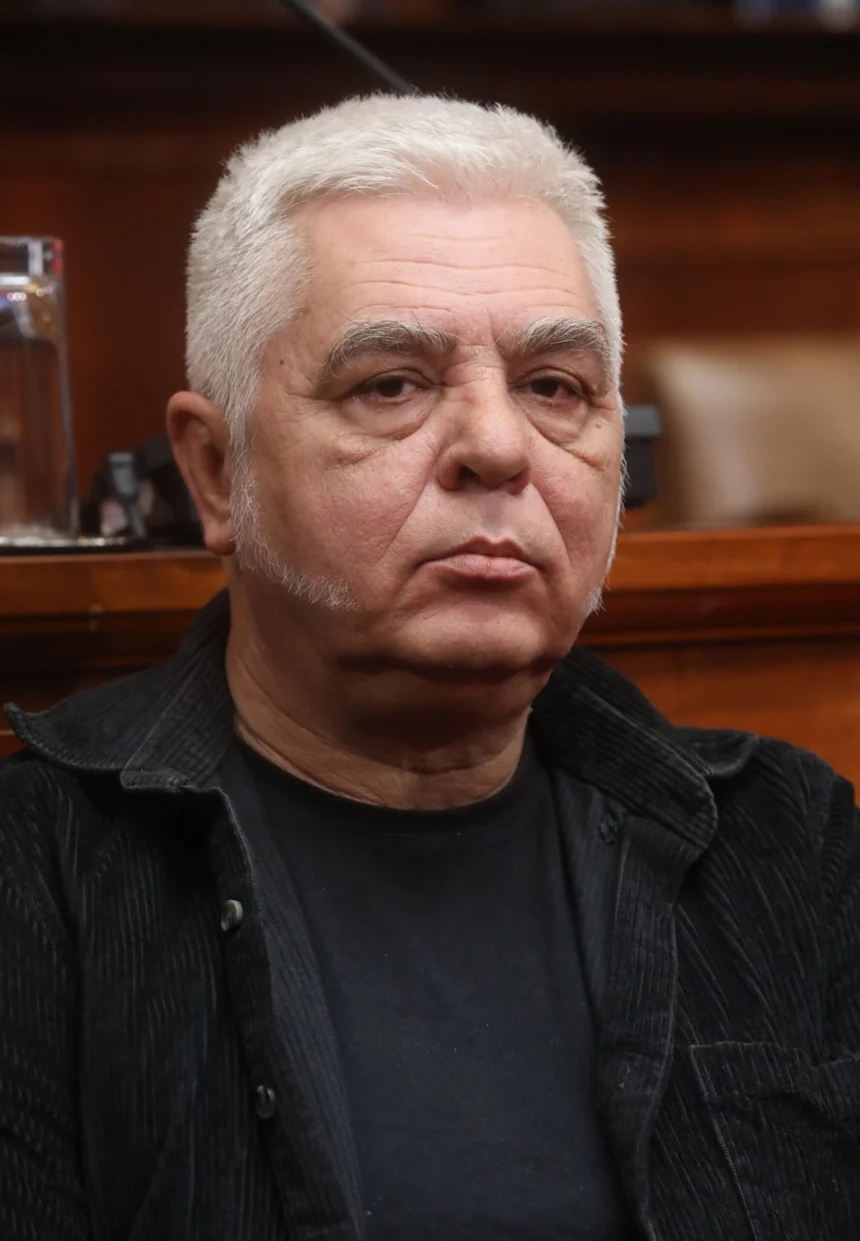
After the scandalous agreement between Sten Miler and the Telekom Srbija CEO, in which they discussed how to eliminate the remaining media outlets not controlled by the government, the state is now openly promoting the same solution through Boris Bratina—to shut down independent media and find someone willing to pay the ransom for that crime.
The quality of media controlled by the state always reflects the quality of the government—and so does the choice of its Information Minister. But until now, we had never witnessed such direct alignment between a minister’s value system and the extremist narratives spread by pro-government tabloids.
It is nothing new that Serbia has right-wing radicals who burn EU flags, homophobes who insult or threaten minority groups and propose concentration camps for them, self-declared “traditionalists” who are anti-European, spread hatred and xenophobia, and glorify war criminals as patriots. But until recently, the Serbian government hesitated to place a full-blown extremist with a lengthy ideological record in a ministerial seat—especially in such a sensitive area as media.
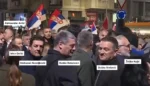
Now, however, the need for a concentration of extremists at the top of government seems to have grown. The public has become so numb to their constant presence that it hardly reacts anymore. This opened the space for Boris Bratina, whose profile conveniently fits the moment. His past membership in the board of the once-banned extremist organization SNP 1389 apparently served as a recommendation.
A Minister Perfectly Aligned With an Anti-Media Agenda
With his radical views, Bratina has become the ideal shape of a “desirable” politician in a country that claims to be on a European path while advocating for everything opposite to European democratic standards.
This contradiction is not an obstacle—it is a qualification.
Government-controlled television channels have recently been giving Bratina generous airtime to promote his idea of handling the media “short and fast.” He openly stated he would ban TV N1 and Nova S because “many people are irritated by what they do.” These outlets, he claims, “deliver a picture against the Serbian people” and therefore “should not exist on air.” He would also expel Radio Free Europe, calling them “foreign agents,” while preparing the legal framework to execute such media purges immediately.
The Medieval Word With a Modern Authoritarian Purpose
In one TV appearance, Minister Bratina mockingly introduced the term “vražda”, confident that few viewers would understand it.
But the medieval legal term reveals everything: the intention to compensate for murder with money.
After the exposed deal between Sten Miler and Telekom’s Vladimir Lučić on eliminating independent media, the message is now unmistakable:
The state itself is proposing the same solution—shut down free media and let someone pay the ransom.
Ultimately, that someone would be the citizens of Serbia.
When Free Press Disappears, Anything Becomes Possible
Hannah Arendt wrote long ago that when a society loses its free press, anything can happen.
Totalitarianism becomes possible when people are deprived of reliable information. The purpose of massive lies is not to make people believe them, but to make them believe nothing.
A population that believes nothing cannot decide, cannot act, and eventually cannot think or judge.
“And with such a people,” Arendt concludes, “you can do whatever you want.”
This is the Serbia envisioned by the current government.
And in that Serbia, people like Boris Bratina play a crucial role.
That is why he should not be underestimated.