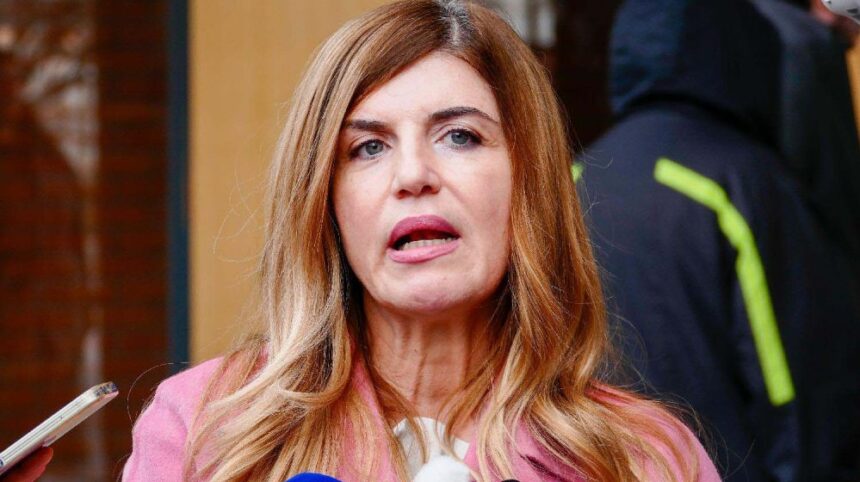
Lawyer Ljiljana Borović, who represents numerous students sanctioned for participating in protests and blockades, stated that she has alerted officials in the European Parliament about what she described as a systematic erosion of democratic principles and the rule of law in Serbia.
Borović spoke during the panel “Western Balkans Forum 2026: A New Chapter for Europe,” held at the European Parliament in Brussels. The forum focused on the state of democracy and legal institutions across Western Balkan countries.
During her address, Borović highlighted what she called serious and long-term violations of democratic standards and institutional safeguards in Serbia. She emphasized that, for the first time in the country’s judicial history — and possibly across Europe — prosecutors handling organized crime cases, a significant number of High Court judges in Belgrade, appellate judges, and prosecutors have taken to the streets in protest, joined by members of the legal profession.
According to Borović, these demonstrations reflect a growing sense among legal professionals that they are unable to protect legality, constitutionality, and the integrity of evidence in key cases without international support.
She also expressed gratitude to the European Parliament for its response, noting that EU officials invited Serbian Justice Minister Nenad Vujić for discussions and criticized the manner in which recent judicial laws were adopted in Belgrade. Borović added that there are assurances that a European Parliament delegation may attend and monitor the trial of students accused of attempting to undermine the constitutional order, scheduled for March 2.
Borović further alleged misuse of the judiciary and repressive mechanisms against civic resistance, claiming that constitutional rights such as freedom of assembly, expression, and political participation are increasingly being restricted. She argued that authorities are portraying student protests as threats to national security, which, she warned, creates justification for repression and criminal prosecution.
She specifically accused institutions, particularly the Prosecutor’s Office for Organized Crime, of being used as tools of political pressure. According to Borović, Vujić’s visit to Brussels was intended to explain developments in Serbia’s judicial system, especially regarding prosecutors’ independence, as part of Serbia’s obligations under EU integration negotiations and Chapter 23.
However, she claimed that European representatives are being presented with a distorted picture of the situation, alleging that the new judicial legislation is being promoted as a reform aligned with European standards while, in practice, it strengthens political control over the judiciary.
Borović concluded by describing student movements as one of the last remaining checks on government power, warning that labeling student activism as a threat signals a deepening democratic crisis.