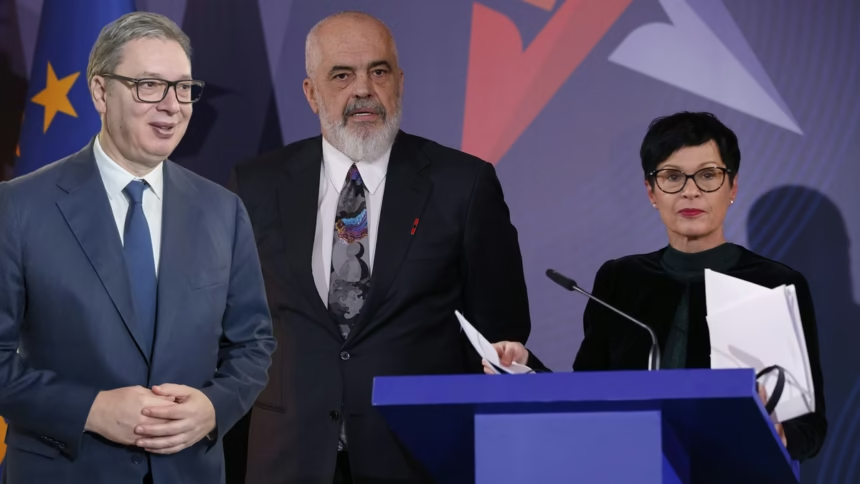
The proposal by Aleksandar Vučić and Edi Rama to accelerate EU integration for Western Balkan countries—while these countries would give up their veto rights as new EU members—was flatly rejected in Brussels. Marta Kos even suggested that the two leaders may not fully understand what joining the Schengen Area entails.
Bojana Selaković, coordinator of the National Convention on the European Union, interpreted the blunt response from Brussels as a sign that the European Commission is losing patience and unwilling to fall for populist gestures from Balkan leaders.
Kos firmly dismissed Vučić and Rama’s proposal to fast-track candidate countries into the EU single market and Schengen zone without granting them veto rights currently held by member states. She emphasized that joining these structures requires significant reform, including economic integration and alignment with EU standards.
The article notes that Vučić and Rama published their proposal in Frankfurter Allgemeine Zeitung, suggesting that their countries were willing to relinquish certain membership rights to address concerns of hesitant EU members.
Selaković stressed that both Serbia and Albania currently face serious setbacks in their European path. In Albania, a major corruption scandal involving the Deputy Prime Minister—Rama’s close ally—has stalled reform efforts. In Serbia, recent laws passed under the “Mrdić” reforms further undermine EU-aligned progress.
She interprets the proposal as primarily intended for domestic audiences, presenting citizens with a “pragmatic” solution while maintaining the appearance that both countries are still committed to EU integration.
The European Commission’s direct rejection, coupled with Kos’s pointed remarks to Vučić and Rama, was also a clear message that Brussels recognizes attempts to manipulate public perception in candidate countries and will not be swayed by populist tactics.
Selaković concludes that because the Commission does not support the proposal, it is highly unlikely to become a realistic option. The EU remains committed to full membership processes, emphasizing that there are no shortcuts to Schengen or the single market.