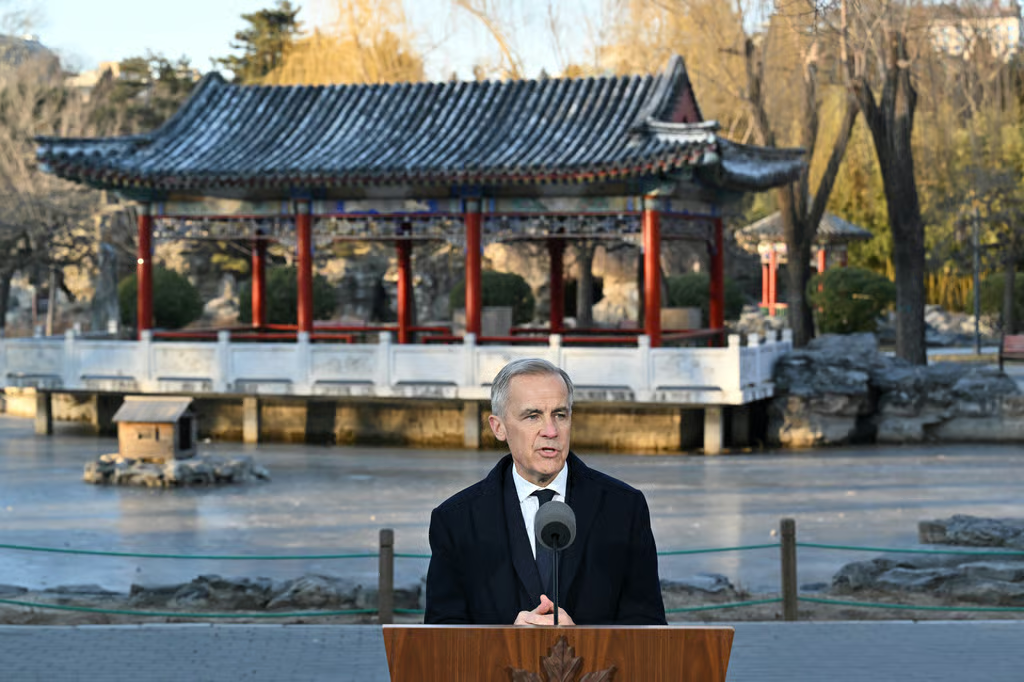
Canadian Prime Minister Mark Carney has warned U.S. President Donald Trump that decisions over Greenland’s future do not belong to Washington, stressing that sovereignty over the Arctic island rests solely with Greenland and the Kingdom of Denmark.
Speaking at a press conference in Beijing following talks with Chinese President Xi Jinping, Carney said Canada firmly supports Denmark amid escalating rhetoric from Trump over U.S. interests in the Arctic.
“The future of Greenland is a decision for Greenland and for the Kingdom of Denmark,” Carney told journalists.
Call for NATO Allies to Respect Commitments
Carney urged NATO allies, including the United States, to respect their commitments, underlining Canada’s backing of Danish sovereignty over the strategically important territory.
“We are NATO partners with Denmark, and our full partnership stands,” Carney said.
“Our obligations under Article 5 and Article 2 of NATO remain, and we stand fully behind them.”
These were Carney’s first public remarks on the growing diplomatic dispute sparked by Trump’s repeated suggestions that the United States could seize Greenland.
Rising Arctic Tensions
The issue has intensified tensions between Washington and European allies, as Trump’s rhetoric has reignited debates over security, sovereignty, and strategic influence in the Arctic.
In response, Denmark and several allied countries announced this week that they would increase their military presence in Greenland, reinforcing their commitment to territorial integrity.
EU and China Also Engaged
The diplomatic standoff follows recent talks in Washington between Danish, Greenlandic, and senior U.S. officials. Shortly afterward, European Commission President Ursula von der Leyen said the EU had “doubled down on investments and support for Greenland”, pledging continued cooperation on Arctic security with allies, including the United States.
Carney confirmed that Greenland and Arctic sovereignty were also discussed during his meetings with President Xi, noting that he found “significant alignment of views” on the issue.