Kosovo has acquired an advanced anti-tank missile system from Turkish state-owned defense manufacturer Roketsan, marking a significant step in strengthening its defensive military capabilities.
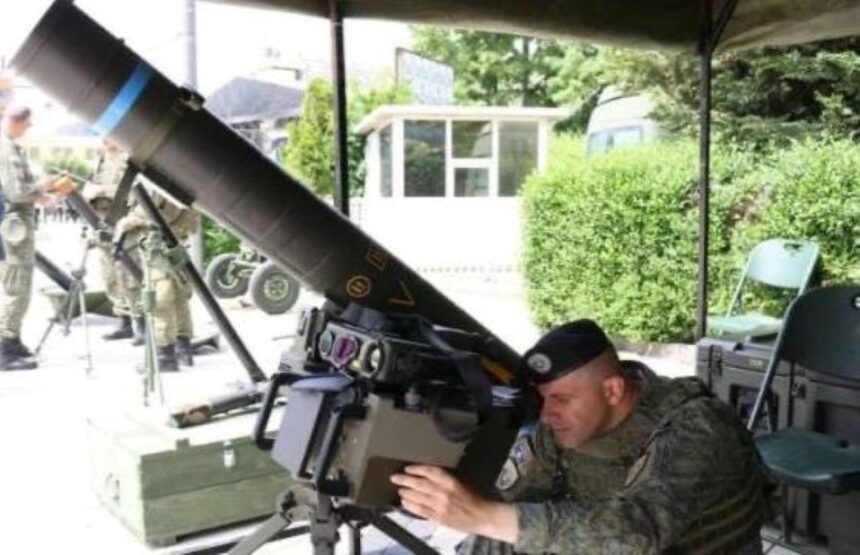
The delivery of the system was contracted in 2023, as confirmed by Acting Minister of Defense Ejup Maqedonci, who announced the development through a post on Facebook, accompanied by images of the OMTAS (Orta Menzilli Tanksavar Silah) system.
What Is OMTAS?
According to the Ministry of Defense, OMTAS is a modern, medium-range anti-tank guided missile system designed to neutralize advanced armored vehicles, including main battle tanks equipped with reactive armor, as well as fortified military positions.
Technical Capabilities
Based on data published by Roketsan, the OMTAS system has the following key specifications:
- Effective firing range of up to 4 kilometers, classifying it as a medium-range anti-tank system
- Missile length: 1.8 meters
- Missile diameter: 160 mm
- Total weight (missile + launch tube): 35 kilograms
Advanced Guidance and Operational Flexibility
One of the system’s most notable features is its Imaging Infrared (IIR) seeker, which allows day-and-night operation and ensures effectiveness even in adverse weather conditions.
OMTAS supports multiple firing modes, including:
- “Fire-and-forget”
- “Fire-and-update”
- Lock-on before launch (LOBL)
- Lock-on after launch (LOAL)
These capabilities provide high operational flexibility and precision targeting on the battlefield.
Combat Effectiveness
The system is specifically designed to engage:
- Main battle tanks
- Light armored vehicles
Equipped with a tandem warhead capable of penetrating advanced armor, OMTAS delivers high lethality against modern armored threats, according to the manufacturer.
“With its precision guidance and tandem armor-piercing warhead, OMTAS ensures effective strikes against armored threats,” Roketsan states in its official description.
Strategic Significance
The acquisition of the OMTAS anti-tank missile system represents a notable enhancement of Kosovo’s defensive capabilities, particularly in terms of anti-armor deterrence and battlefield flexibility.