The People’s Liberation Army (PLA) of China recently tested a new infantry configuration with enhanced weaponry during military exercises, while a viral photo from early January has captured global attention.
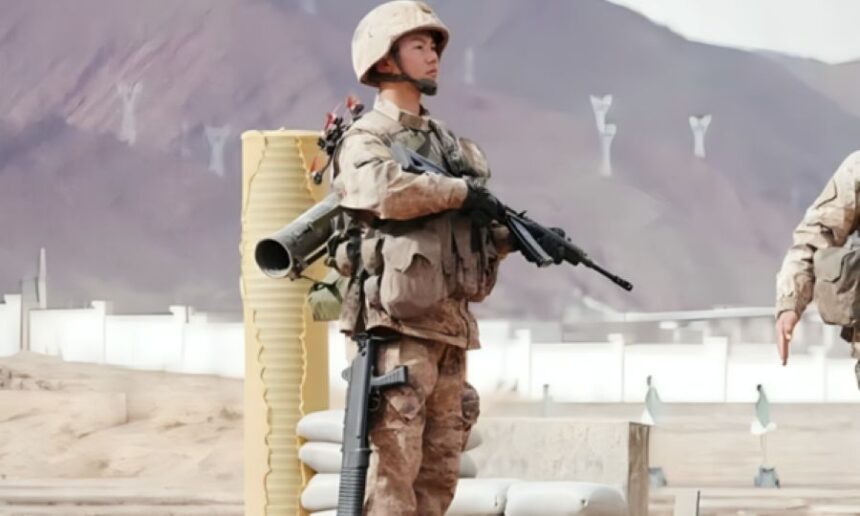
The image shows a PLA soldier equipped with a Type 191 rifle, Type 09 shotgun, a handheld rocket launcher, and a quadcopter drone, earning him the nickname “Chinese super soldier”, according to Defence Blog.
Chinese media, including Observer Network, report that the photo was published on the official account “Junwu Ciweimian”. The unusual combination of weapons has sparked humorous reactions online, with users comparing the soldier to a “gamer who paid for extra resources”, capable of handling long-range missions, close combat, anti-air, anti-armor, and reconnaissance simultaneously.
Observer Network notes that such a configuration remains rare within the PLA, which historically relied on standard-issue rifles and occasional rocket launchers. Over a decade ago, debates even arose over why infantry soldiers were not equipped with pistols. This arsenal is considered unprecedented even by online gaming standards.
The report highlights that a modern infantry combat kit typically includes 150–210 rounds, sufficient for controlled fire. Yet, experiences from Afghanistan, Iraq, and Ukraine show soldiers often carry over 300 rounds to meet complex battlefield demands.
Carrying multiple firearms and modern gear such as optics, suppressors, and foregrips significantly increases weight and reduces mobility.
A focus of the configuration is counter-drone capabilities. Changes in PLA joint brigades have expanded the use of varied weapon combinations, while shotguns, traditionally for close combat, are now considered effective anti-drone tools. The Type 09 shotgun is praised for its magazine-free reload and folding stock, making it a versatile secondary weapon.
Previous PLA attempts to deploy nets and anti-drone systems have shown limited effectiveness, while shotgun-based tactics provide a more flexible approach, a lesson reinforced by the Russia–Ukraine conflict.