The City Council of Sarajevo approved on 28 January a decision allowing the City of Sarajevo to formally join criminal proceedings currently being conducted before competent judicial authorities in Milan, targeting individuals suspected of sniper attacks against Sarajevo’s civilians during the war.
In early November last year, Italian media reported that the Milan Prosecutor’s Office launched an investigation into the so-called “weekend snipers.” According to a criminal complaint filed by Italian writer and journalist Ezio Gavazzeni, these individuals allegedly paid large sums of money to access positions of the Army of Republika Srpska around Sarajevo, where they shot civilians with sniper rifles, reportedly “for entertainment,” during the siege.
Gavazzeni declined interview requests from Radio Free Europe/Radio Liberty (RFE/RL) but later held a press conference in Milan, announcing that he will publish a book in February addressing the phenomenon known as “sniper safari.”
He stated that he first encountered references to foreigners visiting the battlefield in a 1995 article published by Corriere della Sera, which initially inspired him to write a thriller. He later abandoned the project due to insufficient information, until 2022, when the documentary “Sarajevo Safari” by Slovenian director Miran Županič revived the issue.
The Milan Prosecutor’s Office is expected to inform the public of the investigation’s results in March 2026. Should an indictment be filed and guilt proven, this would mark the first case in Europe where sniper killings of civilians in Sarajevo are prosecuted before a court.
Meanwhile, Bosnia and Herzegovina’s judiciary is reviewing the allegations. However, to date, no sniper has been held personally accountable for the killing of civilians—including children—in Sarajevo, either before domestic or international courts.
Throughout the war from 1992 to 1995, foreign journalists and photojournalists occasionally visited Serb military positions around Sarajevo. RFE/RL contacted several of them, but none could confirm witnessing foreigners paying to shoot civilians.
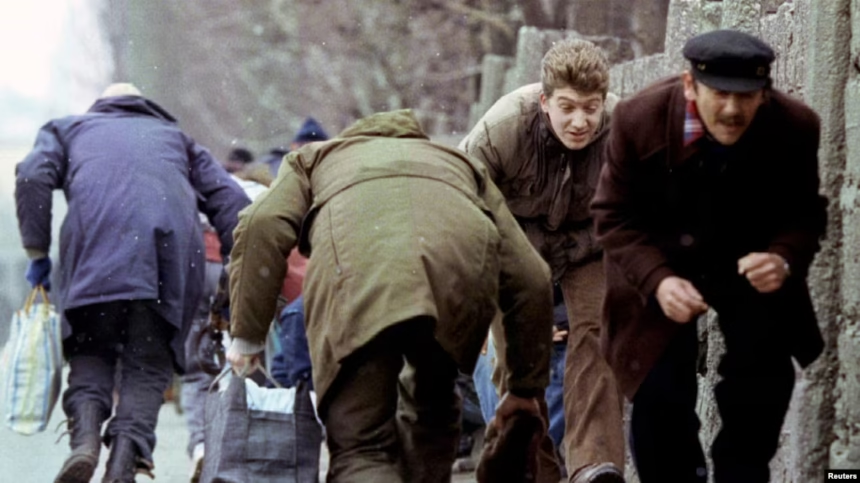
According to victims’ associations and international court judgments, during the nearly four-year siege of Sarajevo, every tenth child killed in the city was shot by a sniper, while more than 14,000 children were wounded.
Despite these facts, no sniper has faced individual criminal responsibility. The Hague Tribunal, in verdicts against senior officials of Republika Srpska, concluded that the sniper campaign had a single objective: to terrorize Sarajevo’s civilian population.