Ten civil society organizations in Kosovo have issued a joint call to parliamentary parties, urging them to prioritize the interests of citizens over party politics and reach an agreement on the election of a new president, in order to prevent another round of early parliamentary elections.
According to the Constitution of Kosovo, the country must have a new president by 4 March, as the mandate of the current president, Vjosa Osmani, ends in April.
Osmani currently lacks sufficient support in the Assembly for re-election, and Kosovo’s main political parties have not yet reached consensus on a candidate.
In their letter, the civil society groups called on parties to:
- Engage seriously and responsibly in constructive inter-party dialogue
- Place citizen interests above partisan calculations
- Contribute to reaching an agreement that ensures full institutional functionality
Recently, Prime Minister Albin Kurti, leader of Vetëvendosje, met with opposition leaders Bedri Hamza (PDK) and Lumir Abdixhiku (LDK) to discuss the matter. However, no agreement on a candidate has been reached, despite the rapidly approaching deadline.
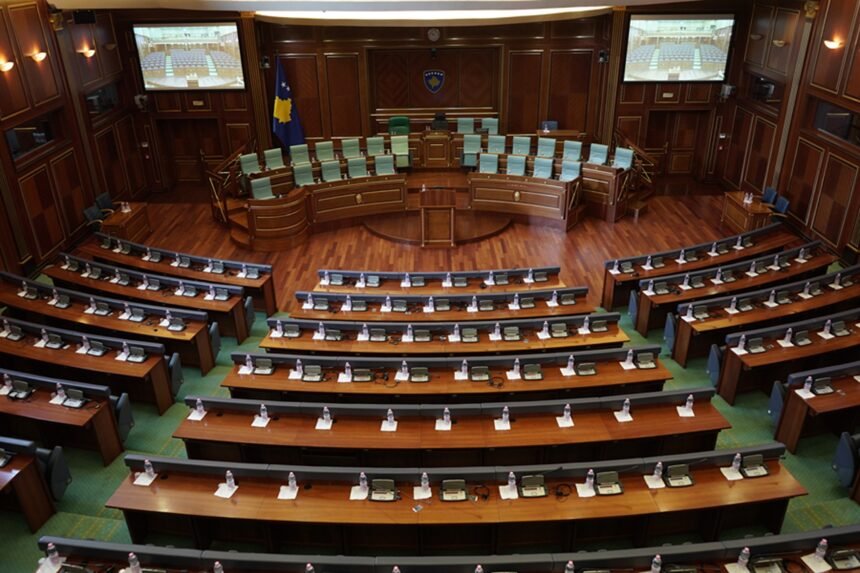
To run for president, a candidate must secure at least 30 signatures from MPs, and two-thirds of votes in the 120-seat Assembly are required for election. The quorum is 80 deputies, and if no candidate secures 80 votes in the first two rounds, 61 votes are sufficient in the third round.
Although the role of the President of Kosovo is largely ceremonial, failing to elect a president on time could trigger a new political crisis and force early parliamentary elections for the second time within months.
Kosovo faced a political and institutional crisis throughout 2025, resulting in delays in budget approval and reduced international funding. Civil society organizations warned that the ongoing delays in presidential elections create a real risk of early elections, further threatening institutional stability, democratic governance, and public trust.
The ten organizations behind the statement are: Demokraci Plus, Kosovo Foundation for Civil Society (KCSF), Group for Legal and Political Studies (GLPS), GAP Institute, Democratic Institute of Kosovo (KDI), Democracy for Development (D4D), Kosovo Law Institute (KLI), Institute for Development Policy (INDEP), Lëvizja FOL, and Kosovo Women’s Network (RrGK).