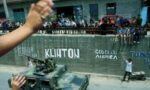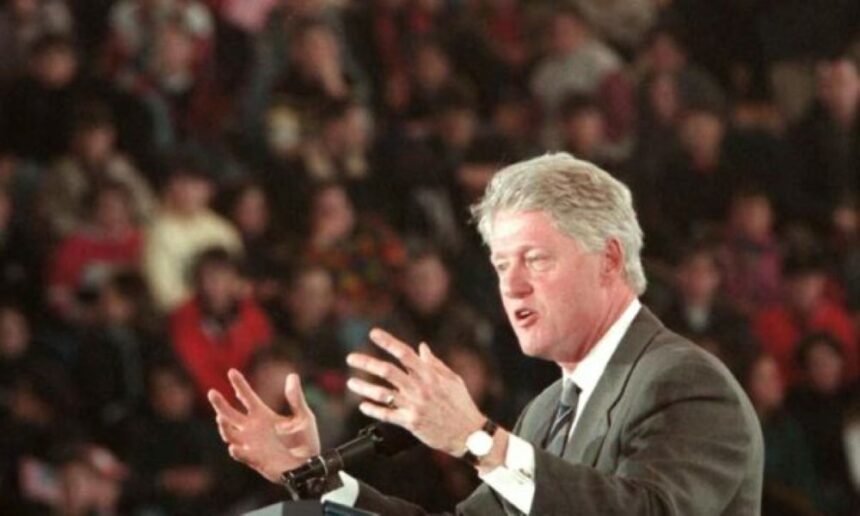
“For the first time in 79 days, the skies over Yugoslavia are silent,” declared former U.S. President Bill Clinton on June 10, 1999, announcing the end of NATO’s air campaign against Serbian military targets.
The 78-day operation was launched to halt the violence of Serbian forces against ethnic Albanians in Kosovo and concluded after what Clinton described as the fulfillment of key international demands.
“The demands of a united and outraged international community have been met,” he said, citing the withdrawal of Serbian forces, the deployment of an international security presence, and the return of displaced Kosovars to their homes.
“I can report to the American people that we have achieved victory — for a safer world, for our democratic values, and for a stronger America,” Clinton added.
Why NATO intervened
The campaign began on March 24, 1999, after diplomatic efforts led by Richard Holbrooke failed to secure a ceasefire with Yugoslav leader Slobodan Milošević.
NATO Secretary-General Javier Solana authorized the strikes, calling it a moral obligation to stop repression in Europe.
How the campaign unfolded
Around 1,000 aircraft took part in the operation, flying from bases in Italy and Germany, as well as from the aircraft carrier USS Theodore Roosevelt in the Adriatic Sea.
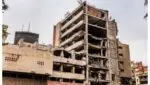
Over 38,000 sorties were conducted, including more than 10,000 strike missions. Targets included military infrastructure, air defense systems, and key communication and energy networks across Serbia, Montenegro, and Kosovo.
End of the campaign
The bombing campaign ended on June 10, 1999, one day after the signing of the Kumanovo Agreement between NATO and Yugoslav military officials.
The agreement paved the way for the withdrawal of Yugoslav forces and the deployment of an international peacekeeping force.
NATO’s Supreme Allied Commander in Europe at the time, Wesley Clark, confirmed that the withdrawal had begun, allowing the operation to conclude.
Aftermath and KFOR deployment
On June 12, 1999, the KFOR mission entered Kosovo with around 50,000 troops. Today, the mission continues with several thousand personnel from multiple countries.
The war left around 13,000 people dead, thousands missing — more than 1,600 of whom remain unaccounted for — and hundreds of thousands displaced, most of whom later returned. Thousands of homes and properties were destroyed.
Reflecting on the intervention, Clinton stated:
“In Kosovo, we did the right thing. We did it the right way. And we will finish the job.”