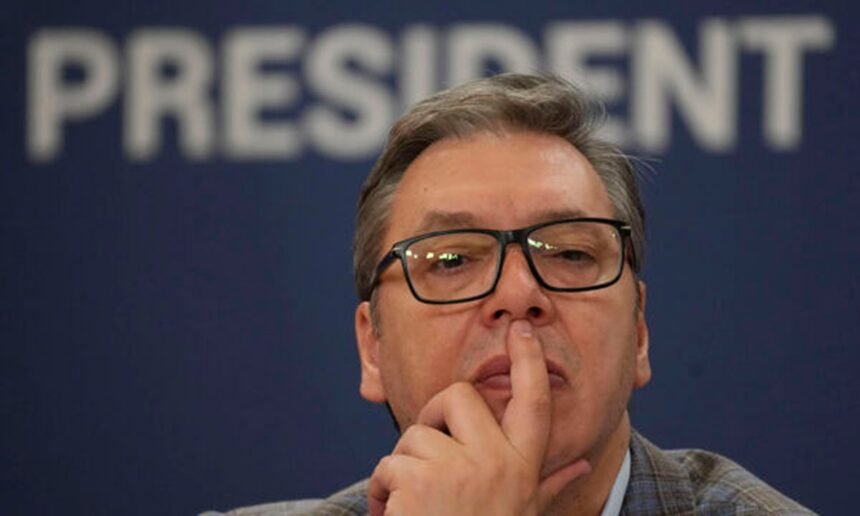
Serbian President Aleksandar Vučić has seven days to decide whether to sign a controversial set of judicial reforms recently passed by the Serbian Parliament, proposed by ruling party MP Uglješa Mrdić. The laws, critics say, represent a significant setback for Serbia’s EU integration and raise concerns over the independence of the judiciary.
The reforms, passed under urgent procedure on January 28, include amendments to the Law on Courts and Prosecutor Offices, the High Council of Prosecutors, the Public Prosecutor’s Office, and the organization of state bodies combating cybercrime, among others. Opposition parties and legal experts have criticized the process as rushed, opaque, and lacking proper consultation, arguing that it undermines democratic norms and the constitutional principle of separation of powers.
Vučić, while insisting that his focus is on the constitutionality of the laws, has not committed to signing them. “Whether I sign them or not is my constitutional prerogative,” he told reporters, avoiding engagement with the broader concerns about democratic oversight or EU standards. Observers note that this approach aligns with Vučić’s pattern of centralizing authority and circumventing institutional checks.
European Commissioner for Enlargement, Marta Kos, called on the Serbian Parliament to revise the laws promptly to align them with EU standards. She described their adoption as a “serious step backward”, criticizing the hurried and non-transparent legislative process. Kos contrasted Serbia’s slow progress with Albania and Montenegro, which are advancing quickly toward EU membership, warning that continued disregard for EU norms could further isolate Belgrade.
Despite Vučić’s assurances that the amendments serve citizens’ interests, analysts caution that these reforms risk politicizing the judiciary, potentially enabling government influence over courts and prosecutors. The opposition and EU officials argue that the move could deepen Serbia’s democratic deficit and stall its EU accession ambitions.
As Serbia stands at a critical juncture in its EU path, Vučić’s decision in the coming days will signal whether the government prioritizes rule of law and European integration, or continues on a course of political consolidation at the judiciary’s expense.