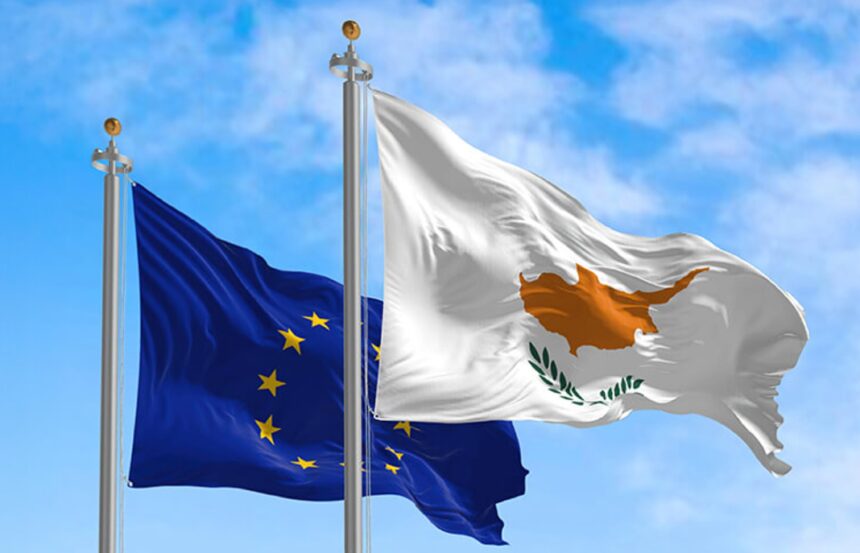
Cyprus will assume the Presidency of the Council of the European Union for the second time, this time as part of a presidential trio together with Poland and Denmark.
Under the slogan “An Open, Autonomous Union in the World,” Cypriot authorities have emphasized that strengthening the European Union’s autonomy will be a top priority. “Autonomy is the necessary next step in the evolving project of European integration,” they stated.
Cyprus has announced that it will bring “a new approach to the table” as it begins its presidency on January 1, at a time when defense, migration, and the war in Ukraine remain at the top of the European agenda, amid an uncertain geopolitical climate.
As one of the EU’s smaller member states, Cyprus aims to exercise its six-month mandate with a high sense of responsibility and commitment, but also with “a different mindset,” said Foreign Minister Constantinos Kombos.
“We believe that small states have much to offer in situations like this,” Kombos said. “It is a very different mindset that one can bring to the table, a different approach. As a small state, we are committed. We do not see the presidency as something we merely have to do; we want to do it in the best possible way.”
Referring to the war in Ukraine, now in its fourth year, the Cypriot foreign minister stressed that the European Union’s attention will continue to remain focused on the country devastated by war and Russian aggression.
He added that, more than five decades after the Turkish invasion of Cyprus, which followed a coup aimed at unification with Greece, Cypriots understand very well the consequences of military conflict and occupation.
For its part, the Cypriot Presidency has stated that it aims to increase the EU’s visibility on the international stage and to play a facilitating role in strengthening the Union as a global strategic actor, through more effective use of existing instruments and the building of strong partnerships across all regions.
“This effort begins with the Union itself. From Ukraine and Moldova to our partners in the Western Balkans and Turkey, in line with strict and fair conditionality. Enlargement is about completing a vision—a vision that unites Europe and expands the space of peace, democracy, security, and stability. Enlargement has proven to be one of the EU’s most transformative tools, including within candidate countries themselves, reflecting their readiness to reform and resolve long-standing issues with their neighbors based on European law, values, and principles. Enlargement essentially represents a strategic investment in Europe’s future. The Cyprus Presidency is firmly committed to advancing the enlargement agenda in a credible manner, delivering tangible results through a merit-based process,” The Guardian writes.
At the top of its list of priorities, Cyprus has placed the strengthening of the European Union’s autonomy, reports Sinjali.
“A more autonomous Union will demonstrate the internal strength needed to cooperate with external partners whenever possible, while acting independently when necessary. European autonomy is layered and multidimensional: from security and defense, to energy and trade, to competitiveness with the green transition, to digital innovation with social cohesion. This is Europe’s moment to define and reshape its future through a determined trajectory of autonomy. This is what is expected of a global leader and a stable and predictable partner firmly anchored in multilateralism and fully committed to the UN Charter and international law, including the law of the sea. These are the guiding principles for building strength through strong partnerships from a principled starting point.”
In this context, the Cypriot Presidency has emphasized that it will pursue an ambitious approach focused on achieving concrete results.