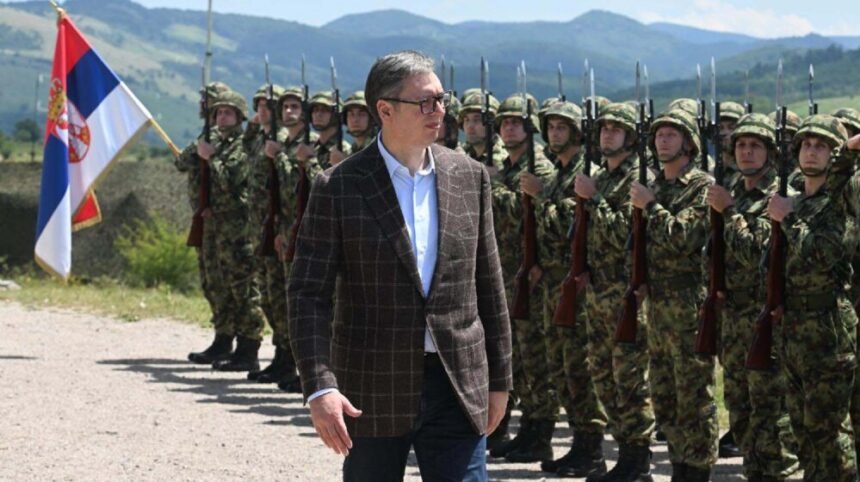
Political analysts and security experts say major global powers have not opposed defense cooperation between Croatia, Albania, and Kosovo, amid claims by Serbian President Aleksandar Vučić that an unnamed major power allegedly approved the initiative.
Vučić has repeatedly described the trilateral arrangement as a “military alliance” that poses a serious threat to Serbia, warning that Belgrade could respond by strengthening its armed forces to deter potential aggression.
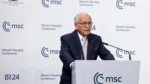
Speaking to journalists in Munich, Vučić suggested that the agreement could not have been reached independently.
“None of those three entities – two states and one entity – would have made that decision on their own. Someone must have given the green light, but I will not say who, because I want to preserve good relations with an important global power,” he stated.
Experts Question ‘Military Alliance’ Narrative
Security consultant Nikola Lunić criticized regional leaders for raising tensions by portraying what he described as a non-binding declaration as a military alliance.
Lunić noted that the cooperation agreement explicitly states it does not create new international or intergovernmental legal obligations or alter existing commitments toward other countries.
According to him, the greater regional risk lies in a potential geopolitical vacuum in the Western Balkans, which could invite influence from external powers.
He pointed to the growing regional role of Turkey, whose foreign policy has historically focused on expanding influence in the Balkans through political, economic, and defense cooperation, particularly involving Albanian-majority regions.
Potential Security Realignments
Lunić warned that if the trilateral defense cooperation were expanded to include additional regional actors such as North Macedonia or Turkey, it could create new strategic pressures on Serbia, potentially pushing Belgrade toward alternative security partnerships with countries such as Greece, Israel, and Cyprus.
He suggested that Serbia could reduce such risks by accelerating its integration into the European Union and aligning more closely with the bloc’s foreign and security policies.
Political Messaging and Domestic Audience
Meanwhile, Predrag Petrović, research director at the Belgrade Centre for Security Policy, argued that identifying a specific country allegedly supporting the agreement is less significant than Vučić’s broader messaging.
Petrović suggested that by leaving the alleged supporter unnamed, the Serbian leader avoids diplomatic tensions with individual Western states while simultaneously signaling distrust toward Western powers to his domestic audience.
“Such ambiguity often fuels conspiracy theories and diverts public attention from internal political issues, including corruption and governance challenges,” Petrović said.
Claims of Political Narrative Strategy
Similarly, Dragan Šormaz dismissed the claims of a hidden foreign sponsor as political messaging aimed primarily at domestic voters.
Šormaz emphasized that Croatia, Albania, and Kosovo signed a defense cooperation agreement rather than forming a formal military alliance, noting that Serbia itself maintains several similar defense arrangements, including agreements with Hungary and the United States.
He added that regional states may seek closer defense cooperation due to concerns about Serbia’s regional policies and security posture.
Broader Regional Implications
Analysts warn that continued political rhetoric surrounding military threats risks intensifying regional tensions and deepening divisions between Serbia and Western institutions, including the European Union and NATO-aligned partners.
Observers note that Serbia’s continued policy of military neutrality, combined with fluctuating relations with Western allies, may further complicate its strategic positioning in an increasingly polarized European security environment.