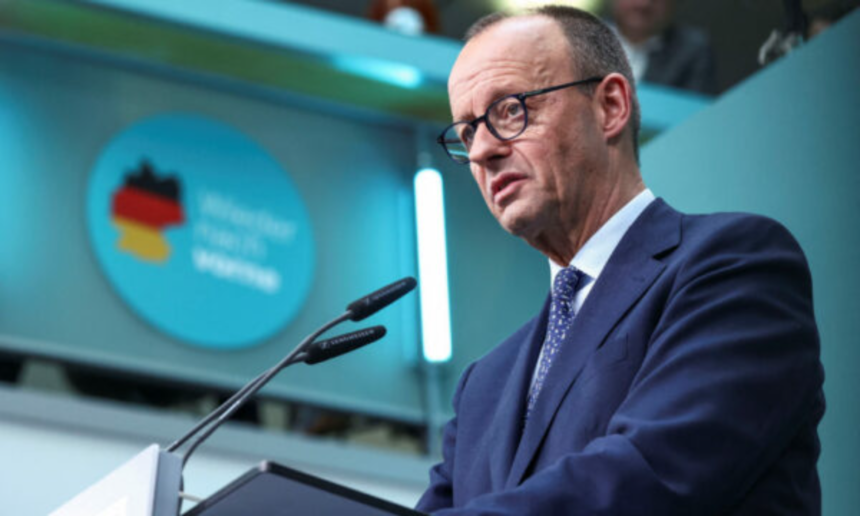
Young conservative politicians in Germany are rebelling against Chancellor Friedrich Merz, refusing to support a pension reform that has already been agreed upon. This disagreement could threaten the governing coalition.
The federal government, a coalition of conservatives (CDU/CSU) and Social Democrats (SPD) in power since May 2025, promised Germans less debate than under former Chancellor Olaf Scholz (SPD). In some areas, it has largely succeeded.
While there have been heated debates over migration policy and the new military recruitment system, compromises were eventually reached. However, disagreements over the state pension system now risk becoming a major test for the coalition under Chancellor Merz.
Germany’s Aging Population and Pension Crisis
Pensions have been a persistent issue in German politics. People are living longer, which means funds from the state pension system are being drawn for longer periods, while the number of contributors is declining. The system now requires substantial federal subsidies, which are projected to reach €128 billion in 2026, nearly a quarter of the total federal budget of €524 billion.
The coalition agreement commits to stabilizing pension levels at 48% of average income until 2031, mainly due to SPD insistence. Experts warn this may send the wrong signal, but the law is expected to pass before Christmas.
Young Conservatives Push Back
Young conservative politicians, particularly the “Union of the Youth”, are protesting. They demand clarity on pensions after 2031 and oppose the agreed plan. They recently met in Rust, southwestern Germany, and unanimously called on the CDU/CSU parliamentary group not to approve the pension package in its current form.
Chancellor Merz, once a role model for the youth wing, addressed delegates:
“Please participate constructively in this debate, not just by saying what cannot be done.”
Merz’s coalition has a slim majority of 12 votes, while the youth wing represents 18 MPs—raising the question: could this dispute realistically threaten the government?
Government Responses
- SPD: Finance Minister and Vice-Chancellor Lars Klingbeil stressed that the law will not be changed.
- CDU Ministers: Economy Minister Katherina Reiche warned against further burdening pensions amid high labor costs, while Education Minister Karin Prien suggested delaying the vote before Christmas sessions.
Merz and CSU leader Alexander Dobrindt rejected the delay. At the Süddeutsche Zeitung Economic Summit, Merz dismissed rumors that the pension dispute could collapse the coalition, emphasizing that governing with a minority would be impractical.
Next Steps
Merz is now trying to convince SPD to allow a small concession: include a provision for revisiting pensions after 2031 in exchange for approving the existing reform. SPD Social Affairs Minister Bärbel Bas warned that failure to pass the pension package would cause significant turmoil within her party and parliamentary group, but she emphasized that the CDU/CSU is currently responsible for putting the coalition at risk.