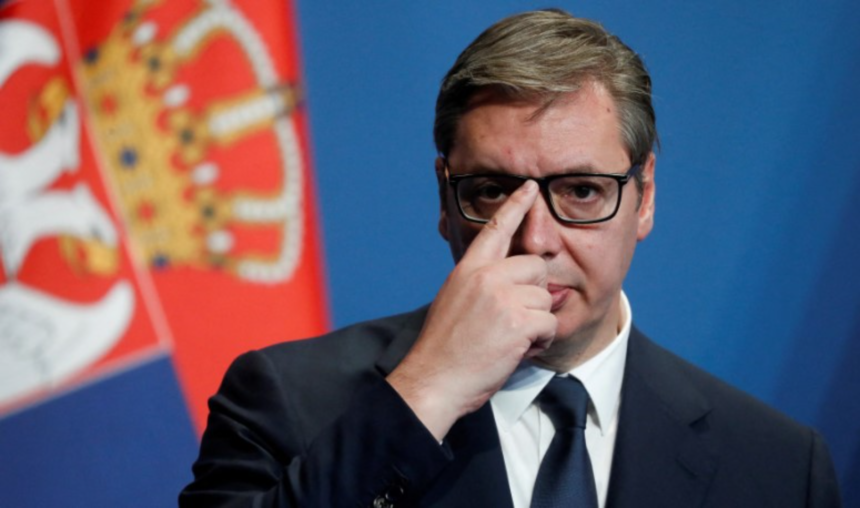
A discussion on the program “Most” by Radio Free Europe/Radio Liberty has reignited debate over whether Serbian President Aleksandar Vučić has effectively closed the door on Serbia’s membership in the European Union after signing laws that critics say undermine judicial independence.
The legislation has drawn strong opposition from the European Union, raising concerns about the rule of law and democratic standards in Serbia. Analysts participating in the debate argued that the current political system in the country may not be compatible with EU membership requirements.
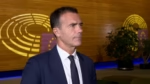
Security policy expert Srđan Cvijić, from the Belgrade Centre for Security Policy, said Vučić’s model of centralized power conflicts with the EU’s expectations for independent institutions and accountability. He added that even those within the EU who support the Serbian leadership for pragmatic reasons are aware that the bloc does not want new internal challenges similar to those associated with Hungarian Prime Minister Viktor Orbán.
Dragana Đurica from the European Movement in Serbia argued that authorities are maintaining the appearance of EU integration through limited technical reforms, while avoiding deeper structural changes that could affect political power. According to her, the EU is not merely a source of funding but a community built on rules, democratic governance, and the rule of law.
Both analysts concluded that Serbia’s EU accession process appears increasingly uncertain, warning that without meaningful reforms, progress toward membership could remain stalled.