For more than a year, mass protests have continued across Serbia. Students, high school pupils, workers, and ordinary citizens have filled streets, squares, and roads, united by dissatisfaction with an authoritarian, corrupt, and self-serving government. Their demand is clear: change is necessary. The key question, however, remains—are these changes being pursued effectively and responsibly?
Democracy as Illusion
True democracy has never existed in a perfect form—not even in ancient Greece, where political participation excluded large segments of society. Still, democracy evolved into the best available framework for governing, grounded in free choice, public debate, and accountability.
In Serbia today, however, democracy has been reduced to a façade. Its mechanisms are abused to serve a narrow circle of loyalists, rather than the public interest. This is not Serbia’s first encounter with such a reality—but that offers little comfort.
Consolidation of Power Through Fear and Control
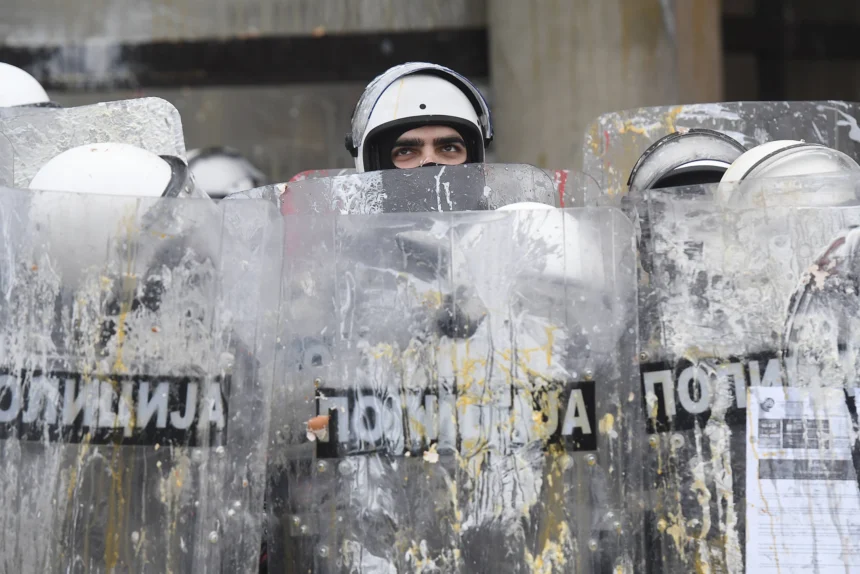
Despite sustained criticism and exposure, the regime has responded by tightening control through rigid and often violent methods, increasingly distancing itself from the Constitution, the rule of law, European values, and its own citizens.
Dissent is labeled as treason. Critics are branded as enemies, foreign agents, or participants in so-called “color revolutions.” The government seeks unchecked authority—to build, demolish, sell, borrow, and decide—without public accountability.
President Aleksandar Vučić has systematically captured institutions, including the judiciary, universities, media, police, and even cultural institutions. Recent appointments and controversial urban projects—carried out despite mass opposition—demonstrate not weakness, but deeply entrenched authoritarianism.
Illusions About Regime Collapse
Claims that the government is nearing collapse are wishful thinking rather than political analysis. Even during the peak of protests, the ruling coalition has won local elections, continued large-scale projects, and expanded its influence.
These developments are not signs of decline, but of a regime confident in its power.
Students and the Question of Political Responsibility
Students emerged as a powerful moral voice, demanding justice while initially avoiding formal politics. However, calls for early elections are inherently political, and politics demands clear responsibility and transparency.
What began as a strength—depersonalization and anonymity—has now become a weakness. Democracy depends on public accountability, not blind trust.
The proposal to support a student list “regardless of who is on it” raises serious concerns:
- Who decides these names?
- Why are citizens excluded from public debate?
- How does secrecy align with democratic principles?
Risks of a Transitional Illusion
The idea of a temporary government that would later organize “real” elections is also problematic. Elections cannot be repeated immediately, and interim authorities could easily lose public trust—creating an opening for the current regime’s return.
The Only Viable Path Forward
Illusions must be abandoned.
There will not be a single unified list.
- Students should present their list openly and without delay
- Opposition parties must participate—this is their responsibility
- Whether through one or multiple lists, the goal must be electoral majority
There are no guarantees, but this approach offers a realistic exit from the democratic dead end. Anything less risks replacing strategy with naïveté—and hope alone is not enough to change a system.