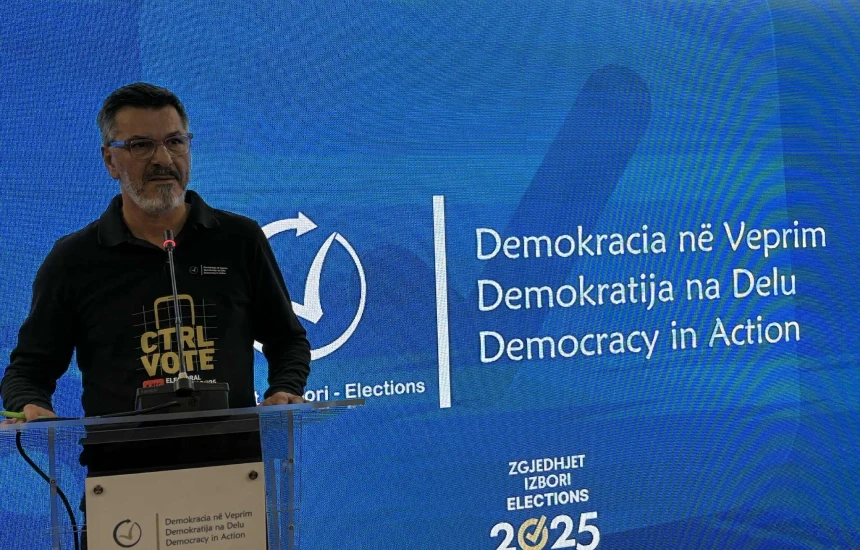
According to Democracy in Action (DnV), the central elections campaign for 28 December was competitive but largely focused on party leaders, with a low level of citizen enthusiasm.
In a press conference on the last day of the campaign, Ismet Kryeziu, head of DnV, stated that the race was calm and free of serious incidents, but noted several trends and challenges affecting the quality of the campaign.
Key observations by DnV:
- Citizen engagement: Participation varied significantly, from a few hundred to over 1,000 attendees at events. Activities were mainly held in urban centers and larger municipalities, while smaller communities were less exposed. Most events took place in indoor venues, and participation was generally moderate to high during list presentations.
- Leader-centric campaigns: Party leaders, especially prime ministerial candidates, dominated events. Candidates for parliament and other party structures played secondary roles, limiting programmatic presentations. Small meetings without leaders occurred but were limited in scope.
- Representation challenges:
- Women were underrepresented as speakers, averaging 1 in 5, with some events having none. Election lists met the minimum legal threshold of 30% but showed limited commitment to gender equality.
- Youth had minimal representation in decision-making roles, with most candidates aged 30–50.
- Persons with disabilities were also notably underrepresented.
- Campaign topics: Focused primarily on economic, social, and security issues, including employment, wages, social welfare, education, healthcare, infrastructure, and NATO membership. Wage increases and social programs were central across parties, regardless of ideology.
- Communication and misinformation risks: Parties used direct meetings and social media, but there were risks of oversimplifying political discourse and reducing substantive debate to short messages.
- Use of public resources: DnV noted potential election integrity concerns, citing government payments of €100 to children and pensioners just days before the election as an example of using public resources for electoral advantage, which could undermine public trust.
- Election oversight: The Electoral Complaints and Appeals Panel played a key role in safeguarding electoral integrity.
DnV concluded that the campaign was leader-focused, concentrated in urban centers, and marked by low citizen enthusiasm, highlighting ongoing challenges with representation, equity, and campaign integrity.