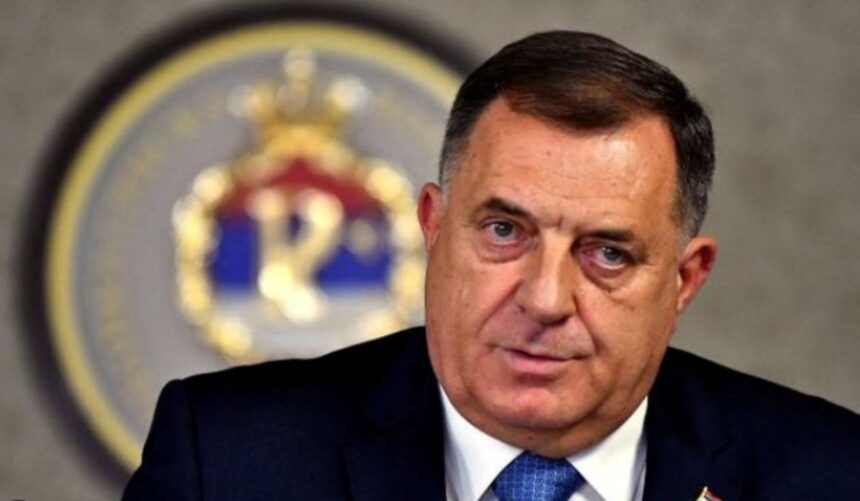
Following the early presidential elections in Republika Srpska (RS), won by Siniša Karan, SNSD leader Milorad Dodik issued a series of sharp political statements, threatening the institutions of Bosnia and Herzegovina and using inflammatory language against Sarajevo and Bosniaks.
Dodik announced that he would soon propose to the RS National Assembly the restoration of all competencies transferred under the Dayton Agreement, including the re-establishment of the RS army, border police, intelligence services, and the abolition of Bosnia and Herzegovina’s state judiciary and fiscal system.
He also labeled Bosniaks and Sarajevo as enemies, stating:
“Muslims and Muslim Sarajevo are our enemies. They have shown this wherever they could.”
Dodik reiterated that the right to self-determination up to independence remains a political goal for Republika Srpska. He accused Bosnia and Herzegovina of being used to “subjugate Christians” and made controversial references to the Srebrenica genocide.
Additionally, Dodik announced the withdrawal of Serb staff from state institutions, assuring that RS authorities would continue paying their salaries. He concluded by stating his intention to focus all political efforts on creating an independent Republika Srpska, rejecting the European Union, and claiming international support for this objective.
RS President Ana Trishić-Babić praised her party’s electoral victory as a triumph of RS citizens over what she described as interference by Sarajevo, the opposition, and segments of the international community. She called for a special electoral law for the Serb entity, criticizing the recent elections as a “violation of democracy.”
RS Prime Minister Savo Minić accused international actors and state institutions, including the Bosnian Court and Prosecutor’s Office and the High Representative Christian Schmidt, of contributing to the “collapse of the system.”
Dodik’s statements mark a significant escalation in political tensions between Republika Srpska and Bosnia and Herzegovina’s state authorities, raising concerns among international observers about the potential impact on the country’s stability.