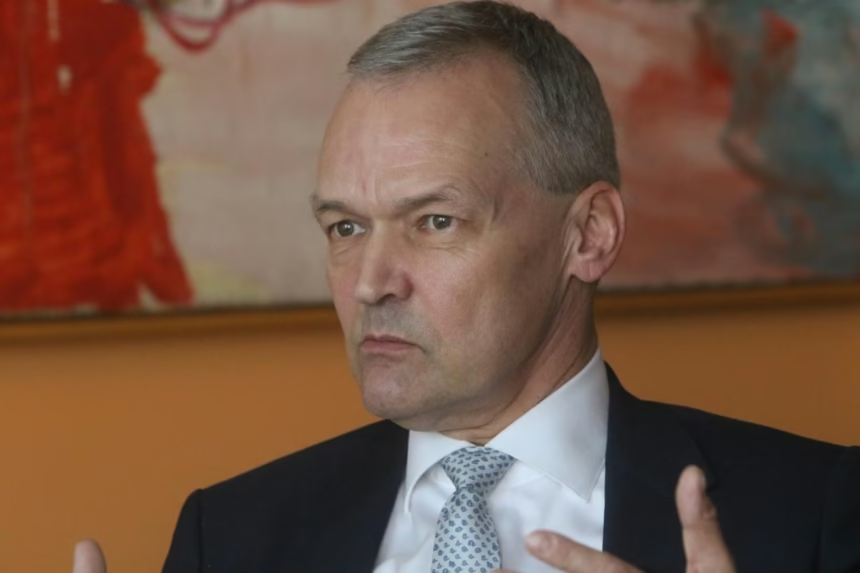
The Ambassador of the Netherlands to Serbia, Martijn Elgersma, has said that Serbia’s decline in global media freedom rankings is a clear warning that something is wrong with the country’s reform process, particularly in areas linked to its path toward the European Union.
In an interview with FoNet, the Dutch diplomat stressed that there are no shortcuts to EU membership, but there is a clear and achievable path through fulfilling the membership criteria — standards that Serbia itself has voluntarily accepted.
He noted that intensive discussions are currently underway regarding Serbia’s EU accession process, adding that political consultations with Serbian authorities are planned for May in an effort to move the process forward.
According to Elgersma, progress toward EU membership is possible if reforms accelerate, pointing out that in the past 25 years the EU has expanded to include many countries, including Bulgaria, Romania, and Croatia, while Montenegro is currently making notable progress in its accession negotiations.
Kosovo Issue Remains Key for EU Membership
The ambassador also emphasized that normalization of relations between Belgrade and Kosovo remains essential for Serbia’s eventual EU membership.
He said the dialogue between Belgrade and Pristina is ongoing and that without progress in these talks, EU accession will not be possible.
Elgersma acknowledged that the issue is complex and politically sensitive, stressing that progress will likely come through gradual steps rather than sudden major agreements.
Media Freedom Decline Raises Concern
A major concern highlighted by the Dutch ambassador is Serbia’s sharp fall in media freedom rankings over the past decade.
According to him, Serbia has dropped nearly 40 places in international media freedom indexes, which he described as a serious signal that reforms related to democracy, rule of law, and media independence have not advanced sufficiently.
Although he noted that such indexes are not absolute truths, he said they remain important indicators that something is not functioning properly within the reform process.
He also pointed out that attacks and threats against journalists continue to occur, adding that this is an area where Serbia can and should make significant improvements.
Students’ Protests Not a “Color Revolution”
Commenting on ongoing student protests in Serbia, Elgersma rejected claims that they represent a so-called “color revolution.”
Instead, he said students are demanding transparency, rule of law, and democratic standards — values that align with the EU’s expectations.
Strong Economic Ties Between Serbia and the Netherlands
Despite political concerns, the ambassador highlighted strong economic cooperation between the Netherlands and Serbia.
He noted that trade between the two countries exceeded €2 billion last year, and that Dutch companies are among the largest investors in Serbia, employing nearly 16,000 people.
Elgersma concluded that closer alignment with EU standards would further increase investment and economic opportunities, emphasizing that progress toward EU membership is beneficial not only politically but also economically.