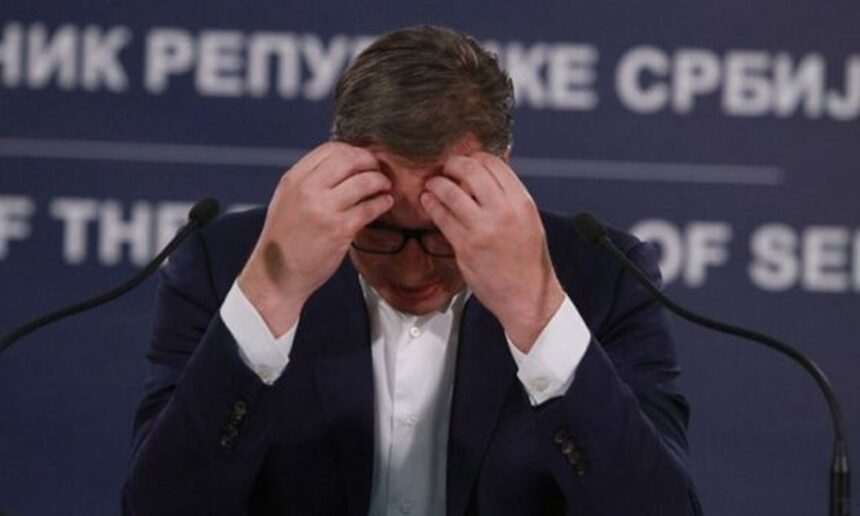
The President of Serbia, Aleksandar Vučić, has been directly involved in the campaign for the March 29 local elections, raising serious concerns over the misuse of state office and manipulation of the electoral process.
Over the past month, Vučić has visited all ten municipalities where elections will be held, promising investments, roads, jobs, and increases in salaries and pensions. He has participated in his party’s rallies, presenting himself primarily as president, even though the law requires a clear separation between state and party roles.
According to the director of BIRODI, Zoran Gavrilović, this constitutes a violation of the law. “What is presented as an official visit is, in fact, an election campaign activity,” he stressed, describing Vučić’s role as an “electoral Santa Claus” using his position to secure an advantage for his party.
These concerns are reinforced by recommendations from ODIHR, which call for a clear separation between state and party in order to guarantee equal conditions in elections. However, Serbian authorities have not responded to the accusations or clarified how these standards are being upheld.
In addition to the involvement of state officials in the campaign, another element casting a shadow over the elections is the presence of Russian “phantom lists.” These lists are suspected of not genuinely representing citizens, but instead being used to distribute votes and create an advantage for those in power. Observers and critics of the electoral process have cited them as part of a broader pattern of manipulation.
Analysts also assess that the use of Vučić’s name on local electoral lists is a form of deception toward voters, as he will not hold any local office, despite the lists carrying his name.
Meanwhile, the absence of an observation mission from the OSCE for these elections has increased suspicions. According to Gavrilović, this may be linked to the failure to implement previous recommendations for electoral reform.
Local elections in Serbia are taking place in a tense political climate, following widespread protests against the government and ongoing allegations of electoral irregularities, including pressure on voters, abuse of state resources, and a lack of equal conditions for competition.
Critics warn that the combination of “phantom lists” and the direct involvement of the president in the campaign risks further undermining trust in the democratic process in Serbia.