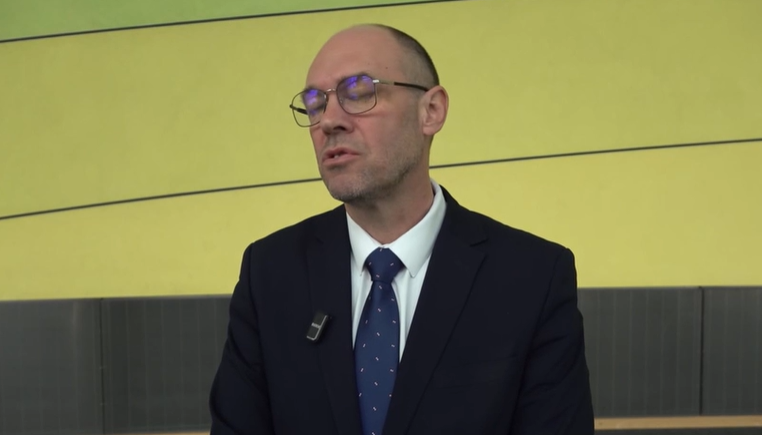
Davor Ivo Štir, a Member of the European Parliament from the European People’s Party (EPP), which includes Serbia’s ruling Serbian Progressive Party (SNS), stated in an interview with N1 that Serbia has not only failed to advance toward EU membership but has regressed in some areas. He specifically criticized Serbia’s recent purchase of Chinese weaponry, describing it as having an offensive purpose rather than a defensive one.
During an earlier visit to Serbia, the European Parliament delegation met with government ministers, ruling party representatives, civil society, and students. According to Štir, the delegation concluded that progress toward EU integration has stalled, and in certain areas, conditions have deteriorated.
Štir also highlighted controversial judicial reforms proposed by SNS MP Uglješa Mrdić. He noted that both experts and the EU itself have warned that these reforms could weaken the independence of the judiciary rather than strengthen the rule of law. Other areas of concern include restrictions on the right to assembly, and limitations on academic and media freedoms.
On Serbia’s foreign policy and arms purchases from China, Štir expressed concern about the country’s ambiguous alignment. He questioned why a candidate country, surrounded by EU member states, would invest heavily in weapons that are clearly offensive in nature. Recent reports indicate that Serbia acquired CM-400AKG air-to-ground ballistic missiles capable of carrying 200 kg warheads over distances up to 400 km. Croatia, an EU and NATO member, criticized the purchase as a threat to regional stability and an attempt to shift the military balance in the Balkans.
Regarding SNS’s status in the EPP, Štir noted that the process of reviewing the party’s relationship with the European bloc is ongoing. EPP membership requires adherence to pro-European values, support for the rule of law, and alignment with EU foreign policy, including support for Ukraine and sanctions on Russia.
Despite these concerns, Štir observed positive developments in Serbia, noting strong public support for rule of law, individual freedoms, and media rights. Some academics have also shown courage in advocating for EU-aligned reforms, demonstrating that there are forces in Serbia committed to European integration. He emphasized the need for political institutions to align with these standards for the country to progress.