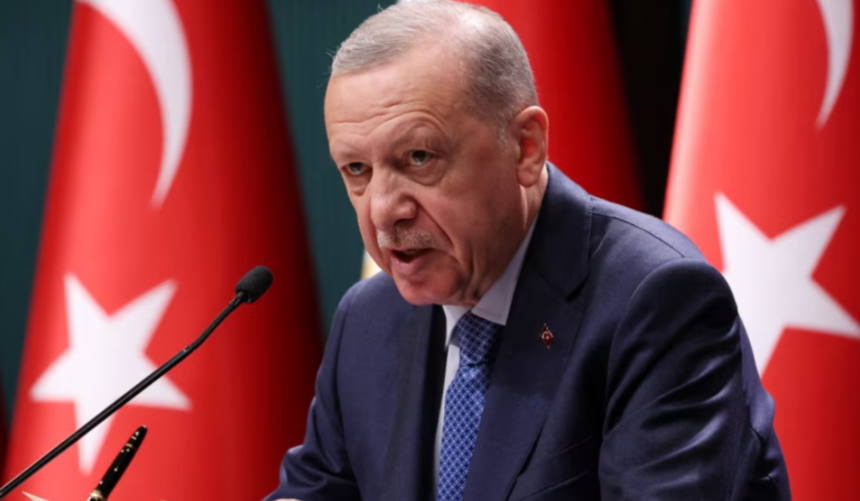
Türkiye is intensifying diplomatic efforts to prevent rising tensions between the United States and Iran from escalating into a broader Middle East conflict, President Recep Tayyip Erdogan said during remarks to journalists following an official visit to Egypt.
Speaking aboard his return flight, Erdogan emphasized that direct leadership-level dialogue between Washington and Tehran could prove crucial, particularly ahead of lower-level nuclear negotiations scheduled to take place in Oman on Friday, according to a transcript released by his office.
The Turkish president stated that Ankara is making every possible effort to prevent further escalation, highlighting Türkiye’s expanding diplomatic role in the region. Erdogan has maintained close political ties with U.S. President Donald Trump, while simultaneously working to strengthen Türkiye’s influence across the Middle East and beyond.
Disagreements Over Scope of Negotiations
Despite diplomatic momentum, significant disagreements remain between Washington and Tehran. The United States insists that negotiations should include Iran’s ballistic missile program and its regional military influence, while Iran maintains that talks must remain limited strictly to its nuclear program.
This dispute has contributed to heightened tensions and mutual threats of potential military action, raising doubts about whether meaningful progress can be achieved during upcoming negotiations.
President Trump intensified concerns earlier this week, warning that Iran’s Supreme Leader Ali Khamenei should be “very worried”, suggesting serious consequences if negotiations fail. Trump also confirmed ongoing discussions with Iran but declined to provide further details.
Relocation of Talks and Ongoing Uncertainty
Following initial discussions about hosting talks in Istanbul, both U.S. and Iranian officials agreed to relocate negotiations to Muscat, Oman, a country that has previously served as a neutral venue for nuclear-related diplomacy. However, no clear agreement has yet been reached regarding the negotiation agenda, leaving the outcome uncertain.
According to U.S. Secretary of State Marco Rubio, negotiations must address Iran’s ballistic missile range, support for proxy armed groups across the Middle East, and domestic governance concerns, in addition to nuclear issues. Iranian officials, however, have rejected these broader demands and warned that expanding the scope of negotiations could jeopardize diplomatic progress.
Reports from Iranian sources suggest that Washington is seeking to limit Iran’s missile range to approximately 500 kilometers, a proposal Tehran has not publicly accepted.
Regional Power Dynamics and Rising Security Concerns
Iran’s regional influence has reportedly weakened following Israeli military operations targeting Tehran-backed groups, including Hamas in Gaza, Hezbollah in Lebanon, Houthi forces in Yemen, and militias in Iraq, as well as the collapse of its key ally, former Syrian President Bashar al-Assad.
Meanwhile, the United States continues to increase military presence in the region, while regional actors, including Türkiye, are seeking diplomatic solutions to avoid a conflict that could escalate into a wider war.
Iran continues to insist that its nuclear activities are strictly peaceful, rejecting accusations from the United States and Israel that Tehran has pursued nuclear weapons development in the past.