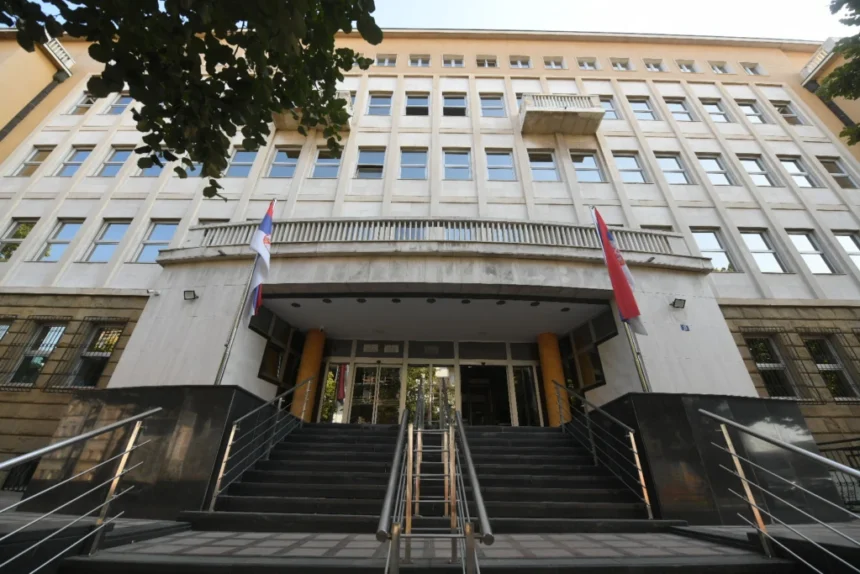
Serbia’s Prosecutor’s Office for Organized Crime (TOK) is facing intensifying pressure, including death threats, institutional obstruction, and legal challenges, raising serious concerns about judicial independence and the rule of law in the country.
According to reports, Serbian police obtained credible intelligence in October and November regarding plans to assassinate three prosecutors involved in trials against members of the powerful Kavac and Skaljari criminal clans. The alleged bounty for carrying out the attacks was reportedly worth several hundred thousand euros in cocaine, highlighting the scale and seriousness of the threats.
Institutional Pressure and Legal Obstruction
Beyond criminal threats, TOK has also faced systematic pressure from political and institutional structures. Authorities are reportedly considering legislative changes that could undermine or dismantle the specialized prosecutor’s office, which handles high-level corruption and organized crime cases.
TOK’s Collegium, in a rare and strong public statement issued on January 30, condemned unlawful pressure on prosecutors and warned for the first time that criminal or disciplinary proceedings could be launched against individuals responsible for obstructing justice, including possible suspects within law enforcement or political institutions.
Controversial Legal Challenges
Recent developments include a request by Dejan Milenković, a former senior police official and co-defendant in a high-profile abuse-of-office case involving former Interior Ministry state secretary Dijana Hrkalović, to remove prosecutor Milenko Mandić from ongoing proceedings.
Milenković claims Mandić mishandled the investigation into the murder of lawyer Dragoslav Ognjanović, alleging the prosecutor failed to protect a potential cooperating witness who was later killed. However, TOK dismissed the request as part of a defense strategy aimed at delaying proceedings, noting inconsistencies in Milenković’s claims.
Mandić is regarded as one of TOK’s most experienced prosecutors and is currently overseeing six major trials involving more than 80 defendants, including cases against alleged Kavac clan leader Radoje Zvicer and criminal figure Nikola Vušović.
Assassination Plots and Organized Crime Threats
Security concerns intensified following reports that assassination attempts against prosecutors were being prepared using snipers or explosive devices. The alleged involvement of organized crime groups underscores the risks faced by officials investigating major criminal networks.
Despite these threats, TOK has signaled a more assertive stance, announcing it is prepared to use all legal mechanisms available to counter interference, including criminal proceedings against officials accused of obstructing investigations.
Warnings Over Judicial Independence
Legal experts warn that the situation reflects deep structural problems within Serbia’s justice system. Prominent lawyer and former information commissioner Rodoljub Šabić described the developments as alarming, noting that the need for prosecutors to publicly defend their independence signals a serious institutional crisis.
Šabić also pointed to past cases, including the controversial Savamala demolition incident, as examples of alleged executive interference in judicial processes. He stressed that the ongoing conflict between prosecutors and political authorities could determine whether Serbia maintains a functioning and independent prosecutorial system.
Rare Accountability for Attacks on Judiciary
Statistical data shows that crimes against judicial officials in Serbia are rarely prosecuted, creating an environment where threats, intimidation, and even violence against judges, lawyers, and prosecutors can occur with limited consequences.
Experts warn that unless attacks on the judiciary result in significant legal consequences, true separation of powers and democratic governance will remain difficult to achieve.