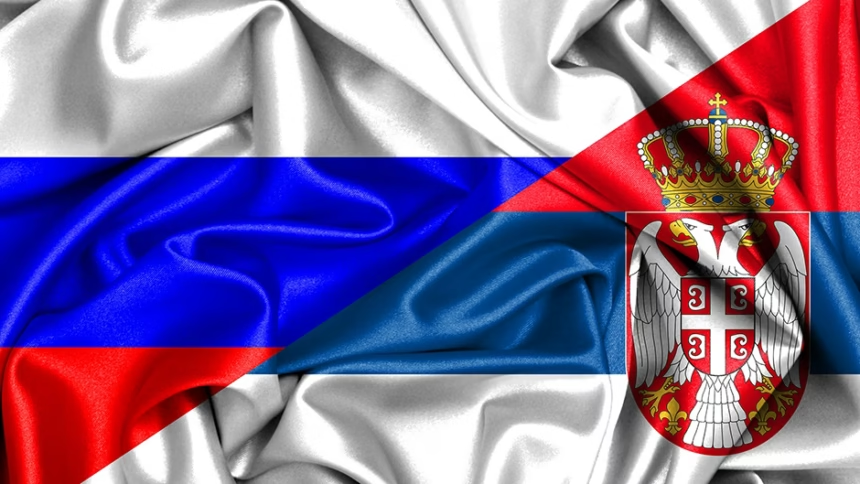
A report citing findings from Estonian Foreign Intelligence Service alleges that Russian security services trained approximately 150 individuals in Serbia for potential coordinated direct attacks on selected targets. The claims were published by The Geopost and further reported by N1 Beograd, raising serious regional security concerns.
Alleged Training Conducted Near Bosnia and Herzegovina Border
According to the report, the specialized training reportedly took place at a tourist complex located near the border between Serbia and Bosnia and Herzegovina. The isolated location allegedly allowed activities to occur away from public attention. Participants are believed to have been trained for coordinated operations, although details about specific targets and training duration remain undisclosed.
So far, Serbia and Russia authorities have not issued official responses to the allegations.
Links to Broader Kremlin Strategy
The report aligns with a broader assessment of Russia’s war against Ukraine, suggesting that the Kremlin has no genuine intention to end the conflict, despite significant military losses, economic pressure, and increased domestic repression. According to the findings, Moscow is allegedly using diplomatic dialogue as a strategic tool to gain time, test Western unity, and attempt to formalize Ukraine’s defeat.
Connections to Moldovan and Romanian Investigations
Earlier investigations cited by Nova.rs suggested that individuals were trained to break police barricades and use weapons during potential civil unrest scenarios.
Additionally, Viktor Furtuna, representing Moldova’s Office for Combating Organized Crime, stated that investigations began in June. Authorities have reportedly identified 111 individuals connected to the alleged plan, with 74 detained for questioning on suspicion of receiving training in Serbia organized by Russian nationals.
Two Serbian nationals, Lazar Popović and Savo Stevanović, were reportedly arrested in September over suspicions of organizing and financing a tactical training camp involving Moldovan and Romanian citizens. According to BIRN, Russian and Belarusian instructors allegedly conducted training at the Sunčana Reka complex between Loznica and Banja Koviljača.
Russian Global Influence and Security Concerns
The report also highlights Russia’s broader geopolitical strategy, which allegedly includes efforts to reshape the international order by appealing to the so-called “global majority,” exerting pressure on former Soviet states, and conducting influence campaigns in countries such as Moldova and Armenia. These efforts reportedly involve propaganda, economic pressure, and political interference.
On a global level, the document points to Russia’s alleged use of academic institutions as influence tools in the Baltic region and increasing engagement across African nations. It also raises concerns that some African students in Russia may have been misled or pressured into military service in Ukraine.
Internal Pressures Within Russia
The intelligence findings describe Russia as facing growing domestic challenges, including economic strain, rising budget deficits, intensified repression, and increased ideological indoctrination, particularly among youth. Independent media outlets reportedly face new restrictions, while electoral processes are described as closely controlled to maintain regime stability. However, the report assesses that a full economic collapse in Russia remains unlikely in the near term.
Regional Security Outlook
Despite ongoing tensions, the report suggests that Russia currently shows no intention to launch military attacks against NATO member states within the coming year. Nevertheless, it stresses that continued investment in defense and strengthening societal resilience remain crucial for countering Russian geopolitical ambitions.