The European Union leadership has sharply criticized Hungary for violating the bloc’s principle of sincere cooperation after Budapest unexpectedly vetoed a €90 billion financial aid package for Ukraine due to an unrelated energy dispute.
The aid program, approved in December by EU heads of state and government after lengthy negotiations, was in its final legislative stage, with the first disbursement expected in early April. Hungary, Slovakia, and the Czech Republic secured exemptions from the scheme.
High-ranking EU officials voiced strong disapproval:
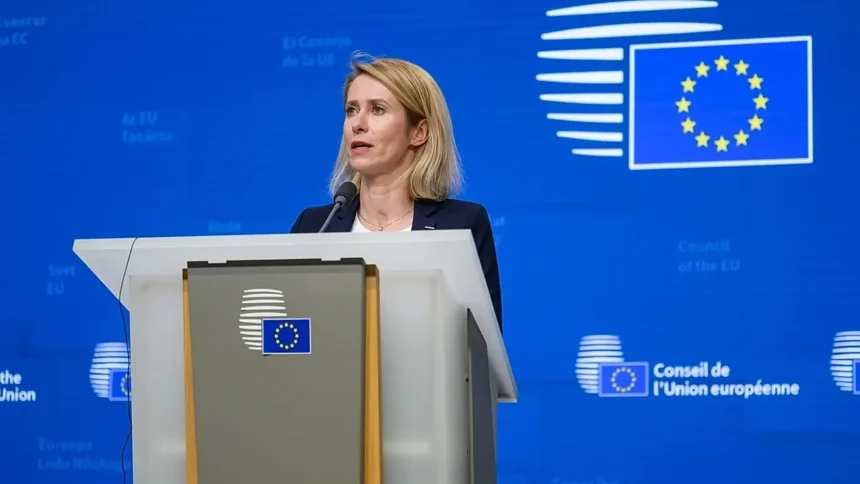
- Kaja Kallas said the veto “is not in line with the sincere cooperation clause in EU treaties.”
- António Costa told Hungarian Prime Minister Viktor Orbán that decisions agreed upon by all 27 leaders “must be respected,” warning that undermining collectively made Council decisions threatens credibility.
- French President Emmanuel Macron echoed the sentiment, emphasizing that political commitments must be upheld.
The disagreement stems from the Soviet-era Druzhba pipeline, which transports Russian crude to Hungary and Slovakia under a sanctions exemption. The pipeline was heavily damaged in late January by a drone attack attributed to Russia. Hungary and Slovakia have blamed Ukraine for subsequent delivery interruptions.
Orbán claimed in a letter to Costa that Ukraine “refuses to restore crude transfers via the Druzhba pipeline due to political considerations, in violation of its international obligations,” calling it an “unprovoked act of hostility that damages Hungary’s energy security.” Ukraine, meanwhile, is continuing emergency repairs but says relentless Russian attacks complicate efforts. Kyiv has also proposed using the Odesa-Brody pipeline as an alternative transport route.
The veto also blocks a new round of EU sanctions against Russia, initially planned for approval by February 24, marking four years since the full-scale invasion.
EU officials warned that Hungary and Slovakia cannot hold the bloc hostage:
- Germany’s Johann Wadephul called Hungary’s stance “unacceptable” and vowed to continue negotiations in Budapest and Brussels.
- Lithuania’s Kęstutis Budrys suggested reviewing voting rules to prevent exploitation of the unanimity principle.
- Sweden’s Maria Malmer Stenergard condemned Hungary’s dual veto as a “shame,” emphasizing the importance of ensuring Ukraine receives the funds covering about two-thirds of its two-year budget needs.
Observers note that the timing may be linked to upcoming Hungarian general elections in April, in which Orbán is trailing in polls. Kallas urged continued discussions to find a feasible solution, with the European Commission calling an Oil Coordination Group meeting for Wednesday.