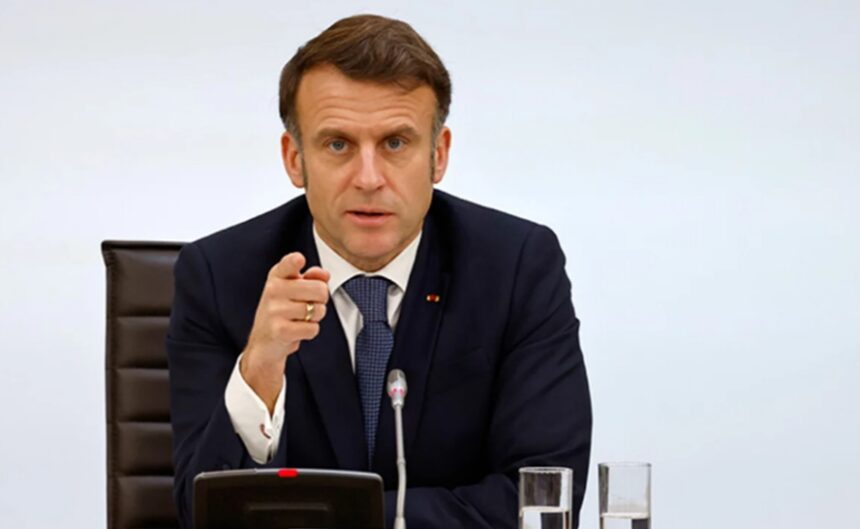
European leaders, including French President Emmanuel Macron, have strongly reacted to the United States’ decision to impose visa bans on five European figures involved in drafting and implementing rules for regulating U.S. digital platforms.
The sanctions targeted former European Commissioner Thierry Breton—one of the key architects of the Digital Services Act (DSA)—as well as four anti-disinformation activists: Imran Ahmed (UK), Anna-Lena von Hodenberg and Josephine Ballon (Germany), and Clare Melford (UK).
U.S. Secretary of State Marco Rubio justified the decision, stating that “for a long time, ideologues in Europe have pressured American platforms to punish views they do not like,” calling this “extraterritorial censorship.”
Strong Reactions from Europe
The response from European capitals was immediate. President Macron described the move as “political intimidation and blackmail,” emphasizing that EU digital regulations are democratically approved and aim to protect European citizens.
“Our rules are not dictated from outside. We will defend digital sovereignty and Europeans’ freedom,” Macron wrote on social media.
European Commission President Ursula von der Leyen also stated that the EU will respond “quickly and decisively” to any measure undermining its regulatory autonomy.
French Foreign Minister Jean-Noël Barrot stressed that “the peoples of Europe are sovereign and will not accept rules for the digital space being imposed from outside.”
U.S.–EU Clash Over Freedom of Expression
Washington considers the Digital Services Act as a measure that restricts free speech and harms American tech companies. In contrast, the EU insists the law aims to combat illegal content, hate speech, and election manipulation.
Thierry Breton reacted strongly, comparing the situation to a “witch hunt,” while noting that the DSA was unanimously adopted by all 27 member states and the European Parliament.
Germany and Spain also supported the sanctioned officials, calling the U.S. decision unacceptable. The German Ministry of Justice stated that it fully supports organizations fighting hate speech and disinformation.
The clash comes at a time of increasingly tense transatlantic relations, particularly over technology, artificial intelligence, and the role of digital platforms in democracy.
French MEP Raphaël Glucksmann reacted strongly against Washington, stating that “Europe must no longer bow down” and that “the time has come to defend its interests and values.”