European Union officials are urgently examining ways to bypass or resolve Hungary’s veto on a crucial €90 billion loan intended to support Ukraine, as tensions rise over energy supplies and political disputes between Budapest and Kyiv.
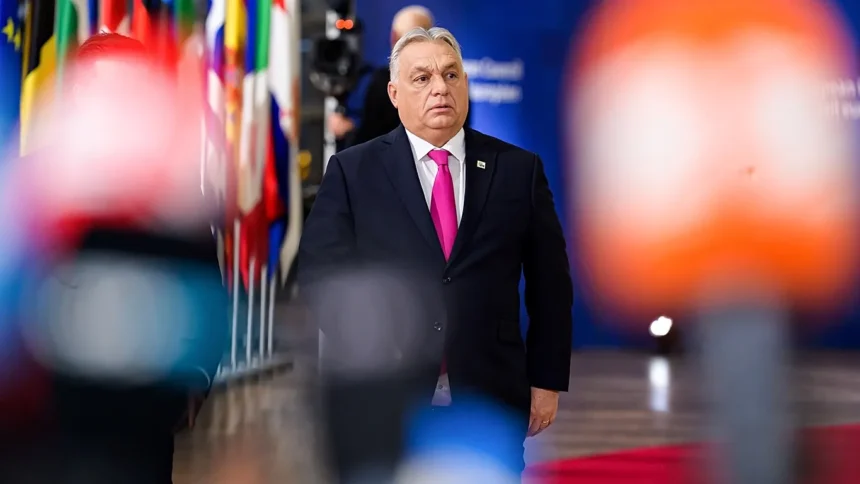
The standoff centers on Viktor Orbán, who has blocked the financial package, accusing Ukraine’s leadership of deliberately disrupting the flow of discounted Russian oil through the Druzhba pipeline. Orbán claims the situation threatens Hungary’s national sovereignty and energy security during a highly contested election campaign.
On the other side, Volodymyr Zelenskyy maintains that the damage to the Soviet-era pipeline resulted from Russian drone attacks, rejecting accusations that Ukraine intentionally halted the oil transit. The dispute has placed European Commission in a difficult position as it tries to balance continued support for Ukraine during the war and the energy needs of EU member states.
During a visit to Kyiv, Commission President Ursula von der Leyen stressed that the bloc remains committed to delivering the loan. “We will deliver on the loan one way or the other,” she said, signaling that Brussels is exploring multiple paths to move forward despite Hungary’s objections.
Pipeline Repairs Seen as the Most Direct Solution
One potential solution under discussion involves accelerating repairs to the Druzhba oil pipeline, which was reportedly damaged in January in Ukraine’s Lviv region during Russian attacks. Ukrainian authorities say restoration work is underway but warn that ongoing bombardments make rapid repairs difficult.
Hungary has proposed a fact-finding mission to inspect the damaged section of the pipeline, an idea supported by Slovakia’s prime minister Robert Fico. While the European Commission has welcomed the proposal as a step toward easing tensions, the initiative remains in an early stage and faces challenges related to security and access to strategic infrastructure.
Croatia’s Adria Pipeline Emerges as an Alternative
With uncertainty surrounding the Druzhba repairs, Brussels has increasingly highlighted the Adria (JANAF) pipeline in Croatia as a viable alternative to maintain oil supplies to Central Europe. Croatian Prime Minister Andrej Plenković has promoted the route as a reliable solution capable of meeting the oil needs of Hungary and Slovakia.
However, the proposal has sparked disagreements over whether Russian crude should be transported through the pipeline. Hungary’s energy giant MOL Group has requested permission to move Russian oil through Adria under existing exemptions, while Croatia argues it is not legally obligated to facilitate such shipments and must comply with EU and US sanctions.
Legal Paths Under Review in Brussels
EU officials are also exploring legal mechanisms that could allow the loan to proceed without Hungary’s approval. Among the options under consideration are treaty provisions that require member states not to obstruct joint EU initiatives and frameworks related to enhanced cooperation among willing countries.
These discussions come as the clock is ticking for Ukraine. Kyiv needs additional financial assistance by early April, especially after the withdrawal of American support, raising concerns that delays could force the country to make significant cuts to public services during wartime.
Defence Funding and Political Pressure
The dispute has also intersected with the EU’s defence financing programme known as SAFE, which provides low-interest loans to member states to boost military spending. Hungary has submitted a €16.2 billion plan under the scheme that is still awaiting approval, adding another layer of political tension.
Brussels now faces a delicate balance: approving the plan could strengthen Orbán ahead of the April elections, while rejecting it risks deepening the confrontation and prolonging the veto on the Ukraine loan.
EU officials acknowledge that the situation is becoming increasingly urgent. As one diplomat summarized the growing pressure within the bloc, “something has to give.”