The European Union has voiced concern over reported irregularities and incidents during Serbia’s recent local elections, while acknowledging strong voter turnout and civic participation.
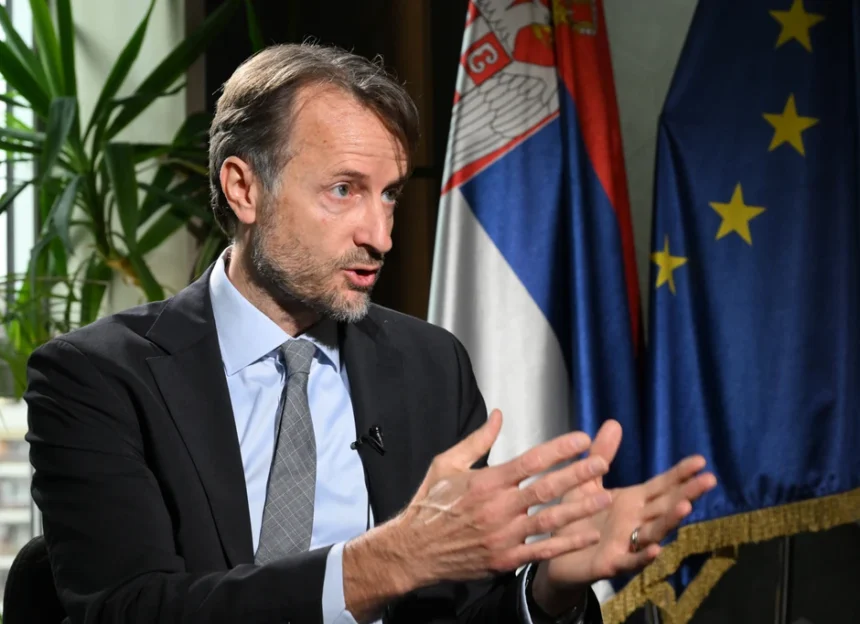
Andreas von Beckerath, Head of the EU Delegation to Serbia, stated that the Union closely monitored the elections held on March 29 across ten municipalities. He noted that, despite positive elements, the process was marred by reported violations and security concerns.
“We regret the number of reported irregularities and incidents during the elections, unequal conditions for participants, and reports of violence against independent observers, citizens, political representatives, and journalists,” von Beckerath said in a public statement.
The EU welcomed the decision of Serbian authorities to invite the Congress of Local and Regional Authorities of the Council of Europe to observe the elections and took note of the findings published by the monitoring delegation.
At the same time, Brussels called on national authorities to ensure a swift, transparent follow-up process and to hold those responsible for any misconduct accountable.
The statement also emphasized that it is the responsibility of the state to safeguard citizens, guarantee proper conditions for election observers, and ensure the safety of journalists during electoral processes.
While praising the high voter turnout and active civic engagement, the EU stressed that further reforms are necessary to strengthen Serbia’s electoral framework. It called for an inclusive reform process involving all relevant stakeholders, with the aim of fully implementing recommendations from the OSCE Office for Democratic Institutions and Human Rights and the Council of Europe.
“The proper functioning of democratic institutions in Serbia lies at the core of its EU accession process,” von Beckerath added, noting that the EU will continue to closely monitor developments related to electoral reforms and future elections.