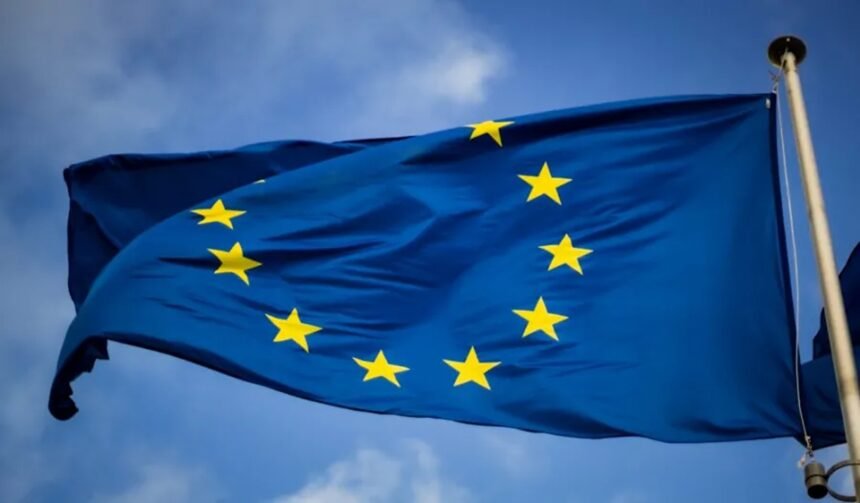
The European Union is approaching a critical moment over its next wave of enlargement, with Montenegro and Albania moving closer to membership, Ukraine and Moldova advancing in their accession processes, and Brussels preparing to confront difficult questions about how a larger bloc would function.
According to Euronews, the EU has a tangible opportunity to expand again for the first time since Brexit. However, as Montenegro and Albania make progress toward membership, the bloc faces growing political and strategic challenges over its ability to absorb new members.
EU officials have highlighted the acceleration of accession negotiations, saying that more negotiating chapters have been closed in the past six months than during the previous decade.
Brussels has increasingly used EU enlargement as a foreign-policy tool aimed at strengthening its influence in neighboring regions, expanding security guarantees and countering the influence of hostile powers amid a rapidly changing geopolitical environment.
But the prospect of a larger Union is also raising questions about how its institutions should be reformed.
Serbia remains a major question for the Western Balkans
One of the key issues concerns geographical balance within the EU.
The 2004 enlargement, when 10 Central and Eastern European countries joined the bloc, shifted the EU’s political center of gravity significantly toward the east, prompting concerns in some Western European capitals.
Montenegro and Albania, given their relatively small size, would have a limited impact on that balance. Their progress, however, is placing renewed attention on Serbia, the largest country in the Western Balkans and one of the most politically controversial candidates for EU membership.
The so-called Friends of the Western Balkans have questioned whether geopolitical considerations are increasingly influencing Belgrade’s accession prospects and have warned that the principle of a merit-based enlargement process may not be applied equally to all candidate countries.
At the same time, pressure is growing to accelerate negotiations with Ukraine and Moldova, potentially creating a situation in which progress by Kyiv could become politically linked to progress by Serbia.
Ukraine is the “elephant in the room”
Ukraine represents perhaps the biggest strategic challenge for the EU’s enlargement debate.
European capitals recognize that some form of European integration or security guarantees for Ukraine is likely to be part of any eventual peace settlement with Russia.
Despite the severe damage caused by the war to its economy, Ukraine’s territory, population and military capabilities would make it a highly influential EU member, particularly in defense and foreign policy.
Its potential accession therefore raises broader questions about how the EU would operate with a significantly larger and more strategically complex membership.
Iceland could also unexpectedly affect the balance. The Nordic country is considering whether to continue its EU accession negotiations, with a referendum scheduled for August 29.
Brussels considers major institutional reforms
The enlargement debate is also reviving calls for fundamental reforms to the EU’s internal decision-making system.
European Commission President Ursula von der Leyen announced in her 2023 State of the Union address that the Commission would examine how the EU could function with 30 or more member states.
The plan was subsequently delayed as Ukraine’s candidacy complicated both the political and practical considerations. The Commission is now expected to publish its assessment on September 30.
Among the proposals being discussed are stronger democratic safeguards for new members and forms of gradual integration that could provide candidate countries with tangible benefits before full membership.
Another major proposal is to reduce or eliminate the requirement for unanimity on issues such as foreign policy. Supporters argue that this would allow the EU to respond more effectively to geopolitical crises and prevent individual governments from blocking common decisions.
There are also proposals to make the European Commission smaller and more flexible, potentially reconsidering the principle that every member state should have its own commissioner.
Critics argue that the timing for such reforms is difficult, particularly with several major EU countries facing elections next year. France is seen as one of the most politically sensitive cases, amid growing support for the far-right National Rally.
Supporters of reform, however, argue that the EU has repeatedly postponed institutional changes and cannot continue waiting for a politically convenient moment.
Ratification could become the next major obstacle
Even if accession negotiations are successfully completed, candidate countries must still secure ratification from EU member states.
Historically, member states have often raised objections during accession negotiations. North Macedonia’s prolonged disputes with Greece over its name and later with Bulgaria over minority and historical issues remain among the most prominent examples.
A complete rejection of a country’s accession treaty at the ratification stage would be unprecedented, but analysts say the possibility cannot be dismissed.
Political shifts to the right in countries including France and the Netherlands have also made voters more cautious about further enlargement.
Montenegro’s EU ambassador, Petar Marković, told Euronews that Podgorica is prepared to accept additional safeguards concerning the rule of law and democratic backsliding partly because such measures could help facilitate ratification.
France remains one of the biggest uncertainties. A constitutional amendment adopted in 2005 requires a new EU accession treaty to be submitted either to a national referendum or approved by a three-fifths majority of both houses of parliament sitting together.
For Montenegro, the ratification process could therefore become an important test of the EU’s willingness and ability to expand.
Its accession could potentially be considered alongside Albania, depending on Tirana’s progress, or alongside Iceland, depending on the outcome of the country’s referendum.
The coming months could therefore determine whether the EU is ready not only to enlarge geographically, but also to undertake the institutional reforms needed to govern a larger and more strategically important Union.