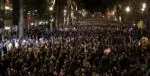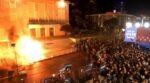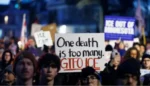
Opposition parties in Serbia have reiterated their call to the European Union to impose targeted sanctions against members of the Serbian Progressive Party (SNS), conditioning the disbursement of EU funds and sanctioning officials responsible for human rights violations.
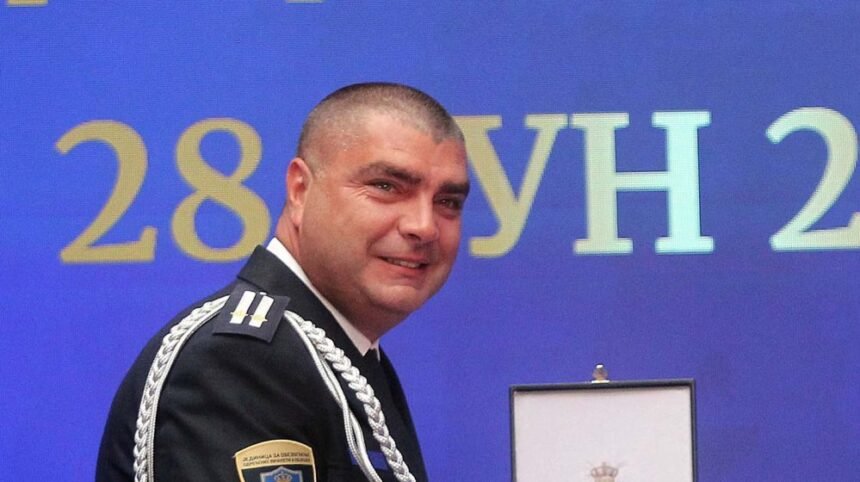
The only individual explicitly named by opposition representatives in their meeting with the European Parliament delegation was Marko Kričak, recently appointed as the head of the Criminal Police Administration. Kričak has been accused of violent actions against students, protesters, and citizens, and previously served as commander of a unit tasked with protecting specific individuals and buildings.
Incidents such as police brutality against students and professors at the University of Novi Sad have reinforced concerns about systemic repression. Experts argue that personalized sanctions targeting individuals—such as freezing assets and travel bans—are a realistic mechanism within the EU, legally grounded in the Global Human Rights Sanctions Regime, and have been applied in Belarus, Russia, and Georgia.
Goran Miletić, founder of Balkans Forward, noted that while such sanctions may not come quickly, they represent an effective pressure tool, particularly in light of Serbia entering a pre-election period. Naim Leo Beširi, director of the Institute for European Affairs, emphasized that the issue is not legality but political will. Kričak represents a security apparatus systematically converted into a tool of repression, targeting students, journalists, activists, and civil society.
“Targeted sanctions are not punishment for Serbia; they are protection for its citizens. When repression is carried out through state institutions, the response must be institutional, precise, and personalized,” Beširi concluded.