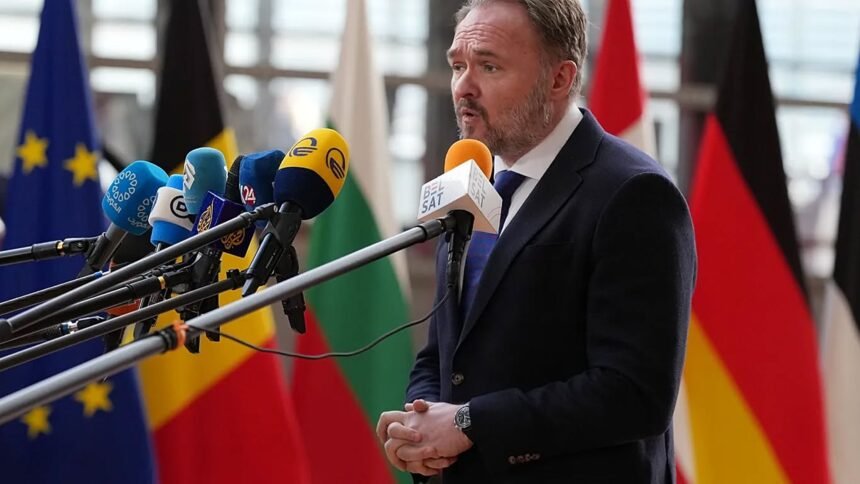
The European Union (EU) has called on its member states to take immediate steps to reduce oil and fuel consumption, as Europe faces potential supply disruptions due to tensions with Iran. A letter dated March 30, seen by Euronews, asked energy ministers to report on current market capacity and propose practical measures to limit demand.
The warning comes ahead of an emergency meeting of EU energy ministers to address a global shortage of 11 million barrels of oil per day and over 300 million cubic meters of liquefied natural gas (LNG) daily.
Key points from the EU letter and statements by Commissioner Dan Jørgensen:
- Member states are urged to increase energy savings and explore alternatives, particularly in transportation, to reduce pressure on oil and jet fuel supplies.
- The EU is preparing for possible disruptions in the Strait of Hormuz, a vital route for 25–30% of global oil and 20% of LNG.
- While immediate supplies are manageable, concerns are growing over jet fuel availability, with Europe heavily dependent on imports from Saudi Arabia and Kuwait.
- Recommendations include postponing refinery maintenance to maintain production and considering biofuels as substitutes.
- Current oil imports for Europe reached 1.064 million metric tons in March, slightly down from February, reflecting already tight market conditions.
Potential Impacts:
- Analysts warn oil prices could rise to $200 per barrel in unpredictable scenarios, with Brent crude already at $119 per barrel, up from $70 before the conflict.
- Natural gas prices could spike to levels seen during the 2022 energy crisis, when the EU lost nearly 45% of Russian imports after the Ukraine invasion.
- Uncoordinated national measures could disrupt the EU internal energy market.
EU Preparedness Measures:
- Member states hold emergency oil reserves covering 90 days, with a total of ~100 million tons in Europe including the UK and Switzerland.
- Gas storage guidance issued on March 20 aimed to prevent panic buying and maintain reserves at ~90% capacity, ensuring stable supply.
- The EU stresses unity and coordination among member states to monitor supply, prevent market instability, and avoid measures that increase consumption or restrict cross-border trade.
Commissioner Jørgensen emphasized that while the EU is “relatively prepared,” timely preparations and mitigations are crucial to withstand a potentially prolonged disruption in energy supplies.