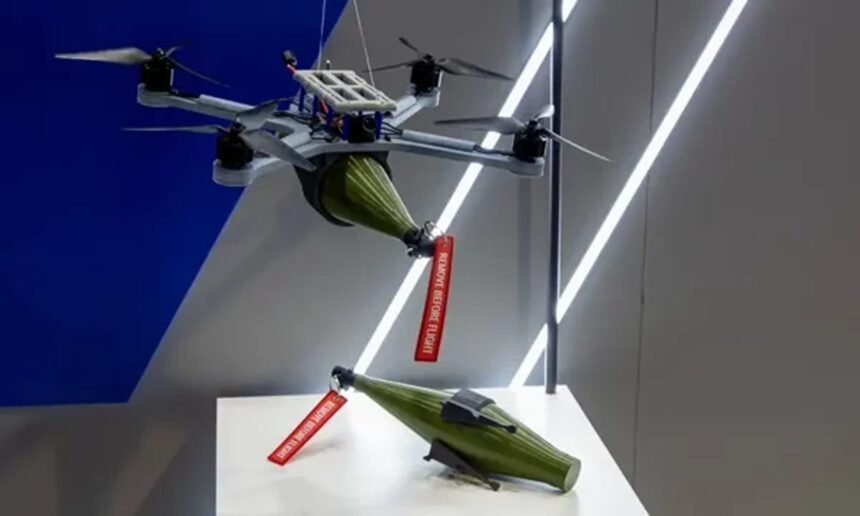
Europe’s defense industry is undergoing a major transformation. The wars in Ukraine and the Middle East have demonstrated that drones, artificial intelligence, sensors and software are becoming central to modern warfare.
Yet this does not mean tanks, aircraft, missiles and ammunition are becoming obsolete. Traditional defense giants such as Rheinmetall, Airbus and BAE Systems continue to benefit from massive order books, while demand for armored vehicles and ammunition remains strong.
The biggest shift is taking place among military-tech startups, which can develop new technologies faster and are attracting record levels of investment. In 2025, European defense-tech startups received around €2.6 billion in venture capital, compared with roughly €200 million in 2021.
Drones are also transforming the economics of warfare. They are significantly cheaper than manned fighter aircraft and can therefore be deployed in much larger numbers. At the same time, the combination of drones, sensors, AI and software is creating an entirely new approach to military operations.
But modern warfare is not simply a drone war. Tanks, armored vehicles, aircraft, ships and ammunition remain essential. The biggest challenge for Europe’s defense industry is increasingly not a lack of orders, but limited production capacity and long delivery times.
In other words, the future of warfare is not drones versus tanks. It is increasingly a combination of both: advanced technology shaping the battlefield, backed by traditional military power on the ground.