A recent investigation by Euractiv has alleged that Euronews is strengthening its financial and business ties with governments associated with authoritarian leadership, including those in Serbia and Azerbaijan, raising concerns about the broadcaster’s editorial independence.
According to the investigation, despite continuing to receive millions of euros in European Union financial support, Euronews has reportedly shifted its business model to rely more heavily on politically connected investors, lobbyists, and commercial partnerships with entities linked to illiberal states. The findings are based on financial documents and interviews with 14 current and former Euronews employees, who described the organization as being under financial strain.
Concerns Over Editorial Independence
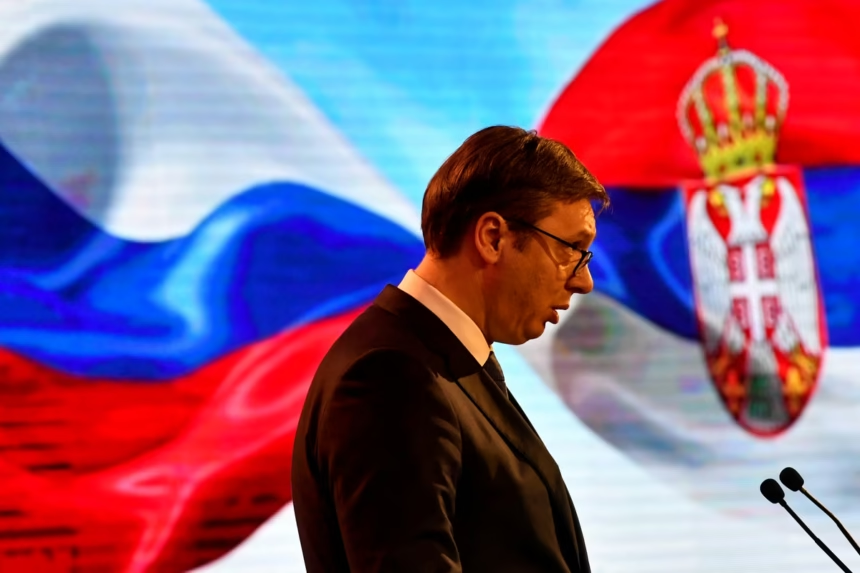
The investigation highlighted growing scrutiny over Euronews’ editorial neutrality, particularly following an interview conducted with Serbian President Aleksandar Vučić during a Euronews-hosted expansion summit. Critics noted that the interview avoided sensitive topics, including nationwide protests in Serbia, Vučić’s criticism of European Parliament members, and broader tensions between Serbia and EU political groups.
Instead, the interview reportedly allowed Vučić to criticize EU officials and publicly reference his relationship with Mario David, father of Pedro Vargas David, the owner of Euronews. Vučić’s spokesperson confirmed that Mario David has maintained longstanding political connections with Serbian leadership through the European People’s Party (EPP).
Expansion of Euronews Operations in Serbia
The report also examined the 2021 launch of Euronews Serbia, established through a partnership with Telekom Srbija, a telecommunications company largely owned by the Serbian state. While the initiative was initially presented as a bridge between Western editorial standards and local journalism, critics argue that maintaining such standards has proven challenging.
Former staff members claimed that a significant shift occurred in mid-2023, when television presenter Minja Miletić was appointed as regional director. One former producer alleged that newsroom staff were reminded to remain mindful of financial stakeholders, suggesting possible external influence.
Tensions During Public Protests
Internal tensions reportedly escalated in April 2025, during large-scale anti-government protests in Serbia. Nearly 80 Euronews employees signed an open letter criticizing management for supporting Serbia’s state broadcaster RTS, which has faced accusations of promoting pro-government narratives.
Several employees who signed the letter were later dismissed, a move that media watchdog organizations described as potential retaliation. Miletić denied any political motivation behind the layoffs, stating that they were part of a broader restructuring process. Telekom Srbija also rejected claims of interference, maintaining that Euronews Serbia operates with editorial independence.
Broader Implications for Media Freedom
The controversy comes at a time when media freedom remains a key condition in Serbia’s EU accession process. During a recent visit to Belgrade, European Commission President Ursula von der Leyen reportedly emphasized that progress in media freedom is essential for Serbia’s European integration.
Serbia currently ranks 96th in the World Press Freedom Index, marking a significant decline from its 59th position a decade ago.
Vučić’s spokesperson dismissed allegations of government interference, stating that the Serbian president is not involved in editorial decisions of foreign media organizations and that the government continues cooperation with EU partners to improve media conditions.
Some journalists within Euronews Serbia reportedly expected intervention from the network’s headquarters if political pressure intensified. However, no such intervention has been publicly reported.
Media analyst Irina Milutinović from the Institute for European Studies in Belgrade warned that the situation could have broader implications.
“The EU cannot stand behind what is happening with Euronews Serbia. This represents a collapse of the brand and a test for Brussels,” she stated.
Ongoing Debate Over Media Independence
The Euractiv investigation has reignited debate over media ownership, political influence, and editorial independence in Europe, particularly as EU institutions continue to emphasize democratic standards and media pluralism across candidate and partner countries.