The European Parliament has postponed a decision on unfreezing the EU–U.S. trade agreement, amid internal divisions over how firmly lawmakers should respond to U.S. President Donald Trump’s recent actions and statements.
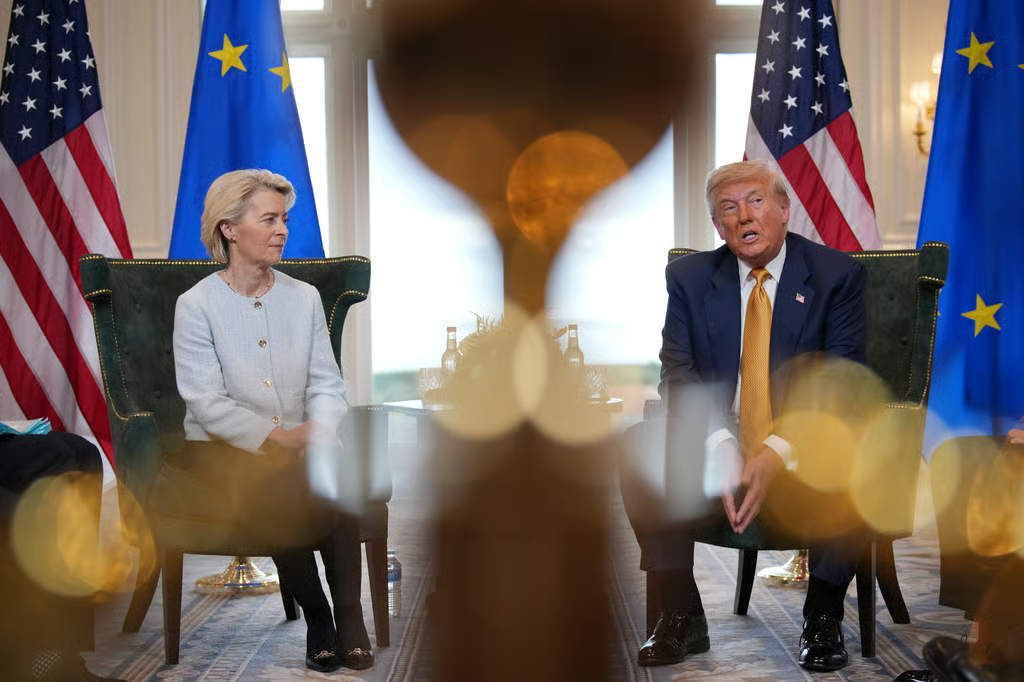
After more than two hours of closed-door discussions, senior members of the Parliament’s International Trade Committee failed to reach consensus on whether the deal should be put to a vote. The agreement, signed in July by President Trump and European Commission President Ursula von der Leyen, was frozen after Trump threatened tariffs against European allies supporting Greenland.
Although Trump has since walked back those threats, lawmakers remain split on whether to immediately proceed with ratification or demand further guarantees from Washington.
“Of course we want the deal, but we need clarity,” said Kathleen van Brempt, a Social Democrat lawmaker, referring to the alleged agreement between Trump and NATO that reportedly led to his policy reversal.
The European People’s Party (EPP) and right-wing groups, including ECR and the Patriots, favor moving forward quickly, arguing that the agreement would restore stability and predictability for businesses.
“It is best for companies to create more certainty,” said Jörgen Warborn, the EPP’s lead trade negotiator.
However, Socialists, Renew Europe, and the Greens have called for a tougher stance, stressing the need for greater transparency regarding U.S. commitments and warning against Trump’s unpredictable approach to trade policy.
Lawmakers also debated whether to advance the EU’s Anti-Coercion Instrument, the bloc’s most powerful trade defense tool. While discussions took place, no majority supported launching its investigative phase at this time.
“Improved EU–U.S. trade relations are essential, but they must be built on mutual respect,” said Karin Karlsbro, Renew Europe’s top trade representative, adding that there is no need to rush the process.
According to Parliament officials, lead negotiators will reconvene on February 4 to determine next steps. Meanwhile, the European Commission has signaled it wants to accelerate the agreement, following Trump’s retreat from tariff threats.
Despite broad agreement that the deal should eventually proceed, lawmakers emphasized the need to maintain pressure on Washington to ensure long-term reliability in transatlantic trade relations.