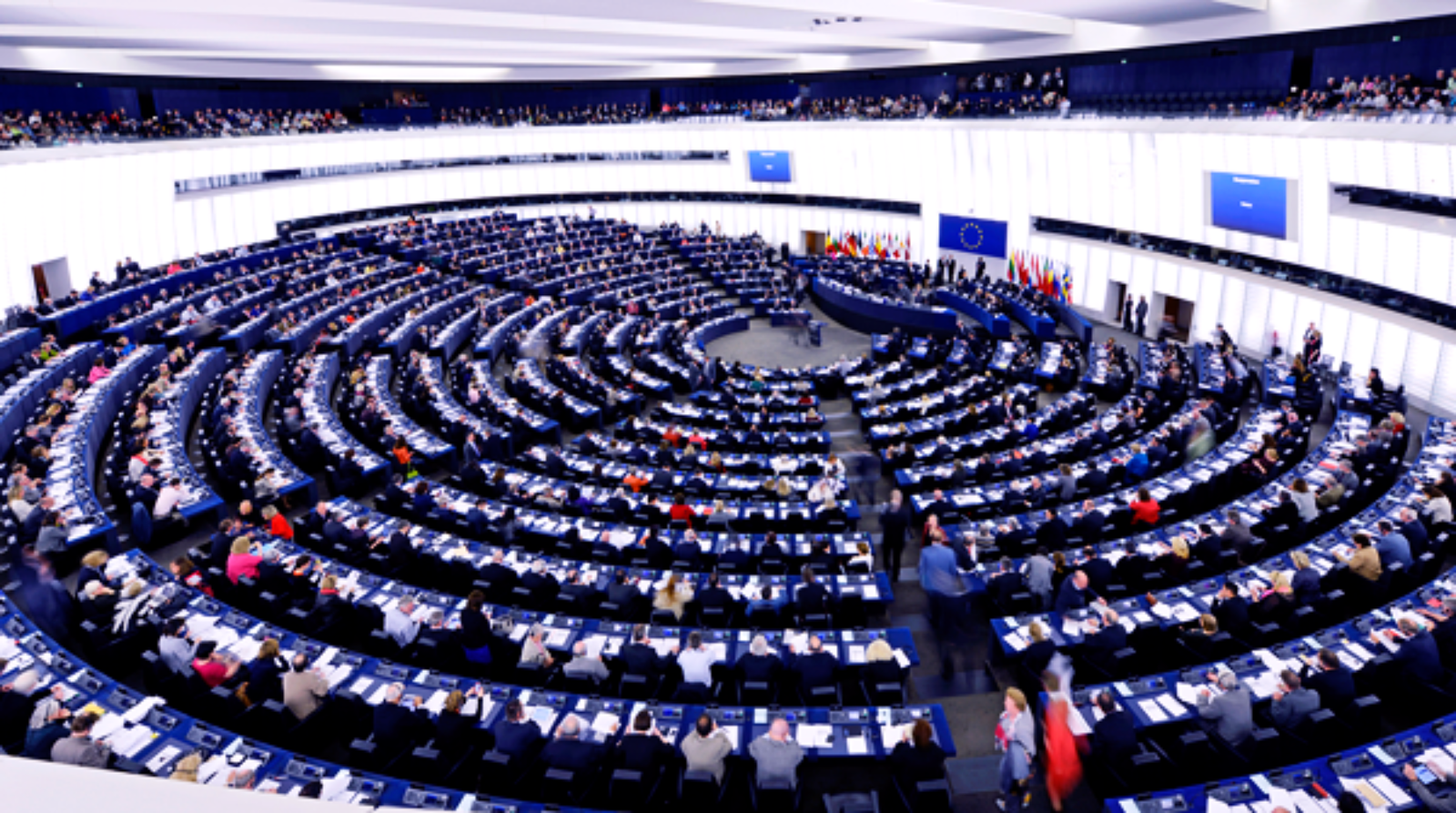
The European Parliament has decided to suspend the ratification of a trade agreement with the United States, adding new economic uncertainty to already strained transatlantic relations.
The European Union opted to pause the process while awaiting clarity on the revised tariff strategy of U.S. President Donald Trump. The decision by Members of the European Parliament came only days after the Supreme Court of the United States invalidated Trump’s use of emergency powers legislation to impose so-called global “reciprocal” tariffs.
“We want clarity about the situation,” said Bernd Lange, chair of the International Trade Committee in the European Parliament. “We need clear guarantees from the United States that it respects the agreement, because this is a key element,” he added during the parliamentary session.
The delay prolongs an already lengthy process for the trade deal, which was reached last summer but has not yet been fully implemented. Analysts warn that if the agreement fails, it could open a new chapter of tension between both sides of the Atlantic, at a time when relations have already been tested by disputes over Russia’s war in Ukraine, pressure related to Greenland, and Trump’s sharp remarks toward European leaders.
Trump also warned on social media that any country attempting to “play games” with the Supreme Court’s decision — particularly those he claims have “taken advantage” of the United States — could face even higher tariffs. Hours after the court ruling last Friday, the U.S. president announced a global tariff initially set at 10%, later increased to 15%, raising further questions about how these measures will align with existing trade agreements.
The U.S. administration has also signaled that it will maintain tariffs imposed under Sections 301 and 232 of U.S. trade legislation, while instructing the U.S. Trade Representative to launch new accelerated investigations under Section 301. These procedures require country-specific probes and findings of trade rule violations before tariffs are imposed and could eventually replace the global baseline tariff approach.