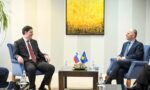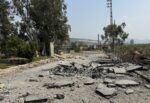
Ahead of an official visit to China, the then Minister of Construction, Transport and Infrastructure, Zorana Mihajlović, instructed members of the Serbian delegation not to speak about the serious shortcomings in the construction of the Belgrade–Stara Pazova railway, but instead to concentrate on securing financing for the next section, from Novi Sad to Subotica.
Despite being fully aware of all the failures committed by the Chinese contractors, the CRIC–CCCC consortium, on the Belgrade–Stara Pazova line, Mihajlović personally ordered that these issues not be mentioned at all during the upcoming visit to China. What she considered far more important was negotiating a new loan to finance the second section of the railway, from Novi Sad to the Hungarian border.
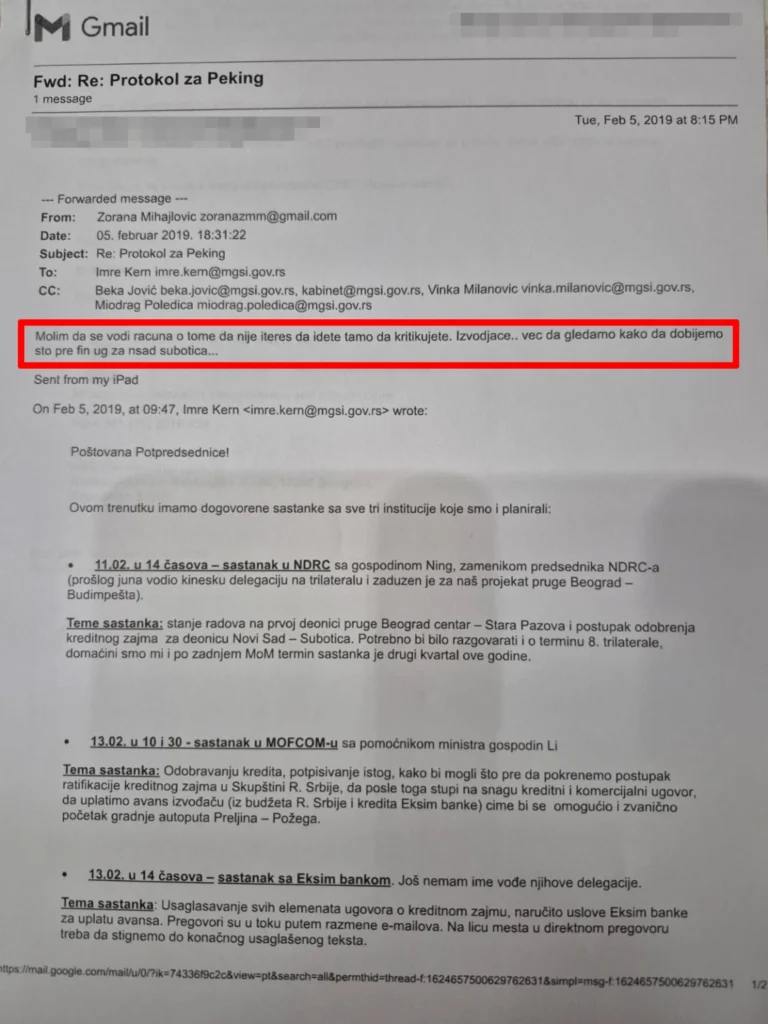
The then Deputy Prime Minister and line minister sent this instruction to her closest associates via a circular email on February 5, 2019, Radar reveals. In the document titled “Protocol for Beijing”, prepared ahead of the Serbian delegation’s departure for negotiations in China, she stated explicitly:
“Please make sure to understand that it is not in our interest to go there and criticize the contractors, but rather to see how we can secure the financial agreement for Novi Sad – Subotica as soon as possible.”
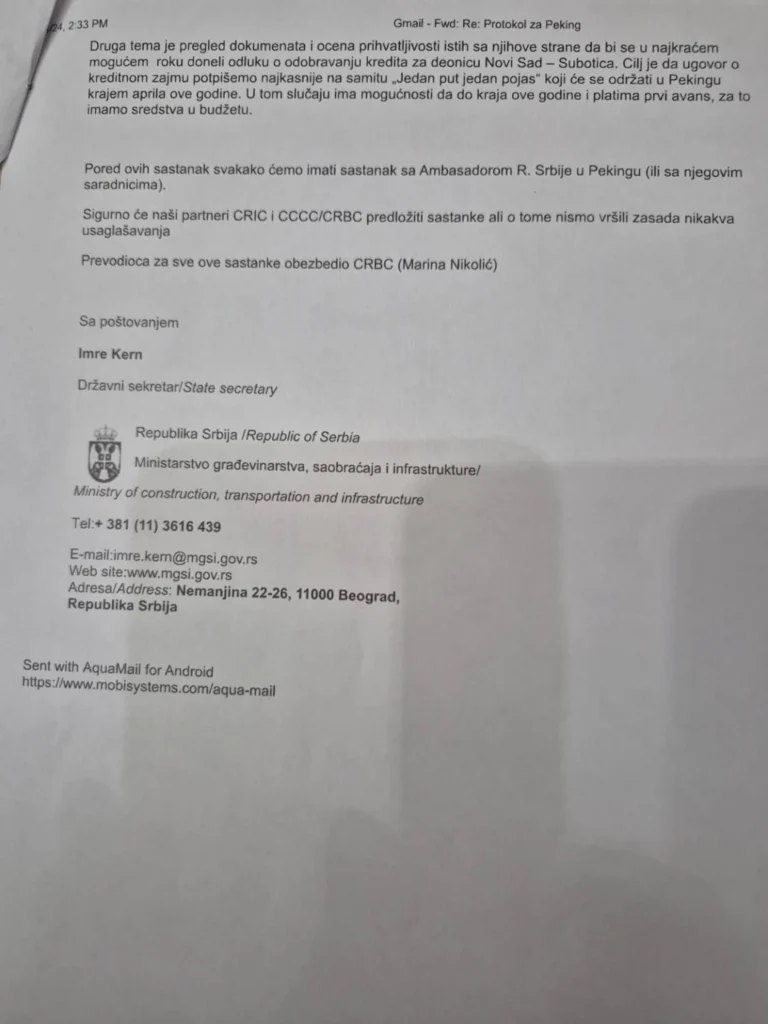
Imre Kern, then State Secretary and now Deputy Mayor of Subotica, replied by informing her of the meeting schedule with Chinese officials, starting on February 11. He did not object to her instruction. On the contrary, he confirmed that the meetings would largely revolve around obtaining additional Chinese loans. The first planned meeting was with the Vice President of the National Development and Reform Commission (NDRC), responsible for the Belgrade–Budapest railway, where the agenda included “the status of works from Belgrade to Stara Pazova and the loan procedure for the Novi Sad – Subotica section.”
Rushing to Pay Advances to Contractors
A similar agenda was prepared for the meeting with the Assistant Minister of Finance, focusing on:
“Approval and signing of the loan in order to quickly initiate ratification in the Serbian Parliament, after which the commercial contract would enter into force, allowing us to pay the advance to the contractor… thereby enabling the official start of construction of the Preljina–Požega highway.”
It is worth recalling that for this section of the “Miloš Veliki” highway, the Serbian government selected the Chinese company CCCC as the main contractor, paying €962 million instead of the originally agreed €450 million, or roughly €31 million per kilometer.
Kern also informed the minister about planned meetings with representatives of the Exim Bank regarding the highway loan, adding only at the end that “our partners CRIC and CCCC/RBC will certainly propose meetings as well,” though no final agreement had yet been reached.
None of the minister’s associates objected. Instead, Kern confirmed that discussions in China would largely focus on new loans, accelerating the construction of the second railway section and the Preljina–Požega highway.
The Consequences of Silence
The consequences of Mihajlović’s instruction not to “step on the toes” of Chinese contractors soon became evident. In August 2020, the supervisory authority, Serbian Railways Infrastructure, identified numerous irregularities on the Belgrade–Stara Pazova railway, as documented in detail by members of the parliamentary inquiry commission, Professors Ognjen Radonjić and Vladimir Obradović.
That internal report, which included criminal complaints against contractors, showed that the responsible authorities including Minister Mihajlović had sufficient information to anticipate and prevent later tragic outcomes, including the collapse of the canopy in Novi Sad, but chose to ignore the violations. This included the fact that contractors had hired subcontractors with negative references in Serbia, without approval from the Ministry or the railway infrastructure authority.

The report does not describe minor procedural mistakes, but rather a systemic pattern: construction outside project documentation, without effective supervision and without any trace in official records. Notably, Kern informed those involved via email on August 14, 2020, that criminal complaints had been filed against those responsible. However, available documentation shows only one complaint against a Serbian citizen employed by CRIC at the time.
What Mihajlović Said Then — and What She Says Now
After losing her ministerial post, Mihajlović accused some party colleagues of using the ruling SNS party “as a jukebox for enrichment and arrogance.” Over time, she re-emerged as a frequent guest in pro-government media, where she addressed Radar’s reporting while avoiding its core findings.
She now claims the opposite of what she explicitly demanded in writing from her closest associates in February 2019.
During negotiations in China that same year, talks were also held on a new loan for the “Miloš Veliki” highway section, where CCCC was again the main contractor, paid €962 million instead of €450 million.
In response to criticism, Mihajlović stated:
“They started spreading stories through their media that the commercial contract was flawed and that we were all responsible for the canopy collapse. Everything they said is a lie, manipulation, or half-truth. Yes, I knew there were problems on the railway that is why inspections were carried out, criminal and economic offense charges were filed, and works were halted until issues were fixed. The Chinese had to correct everything at their own expense to meet European standards. The state acted seriously, responsibly, and conscientiously.”
Reality Contradicts the Claims
How “serious” and “responsible” that conduct truly was became evident in March last year, when experts from Serbian Railways Infrastructure identified numerous defects on the Belgrade–Stara Pazova section — three years after its ceremonial opening. The deficiencies had clearly not been resolved, despite the former minister’s claims.
Radar reported on these issues in multiple investigations, including “A Regime’s Project of the Century with a Thousand Flaws” and “The High Cost of Party-Based Employment.” An expert report sent on March 6, 2025, listed 135 specific deficiencies, some of which explicitly “endanger passengers’ lives.” Visible damage was also recorded on the Hajdin railway bridge, potentially affecting traffic safety.
Serbian Railways Infrastructure requested that Utiber order CRIC, CCCC, and Russia’s RŽD International to remedy all deficiencies. However, the request came after the warranty period had expired, effectively shielding contractors from responsibility.

Penalties Paid Only by Serbia
Neither Chinese nor Russian contractors faced consequences for their failures. Serbia, however, did.
Under a protocol signed by Mihajlović on December 30, 2016, Serbia agreed to pay penalties of 1% on unused portions of the Russian loan. As a result, Serbia paid $4,733,000 to Russia on March 14, 2018. The public has never been informed of any foreign contractor paying penalties to Serbia even when deadlines were exceeded by three years or more.
Even after serious construction failures near Čortanovci in 2018, and laboratory findings that materials used did not meet standards, no corrective action was taken by contractors directly contradicting Mihajlović’s public narrative.
Eventually, oversight was removed from Serbian Railways Infrastructure and transferred to private firms. Shortly thereafter, the government appointed Nebojša Šurlan as director of the state company a figure later charged by the Organized Crime Prosecutor’s Office over corruption during the Novi Sad–Kelebija railway reconstruction.