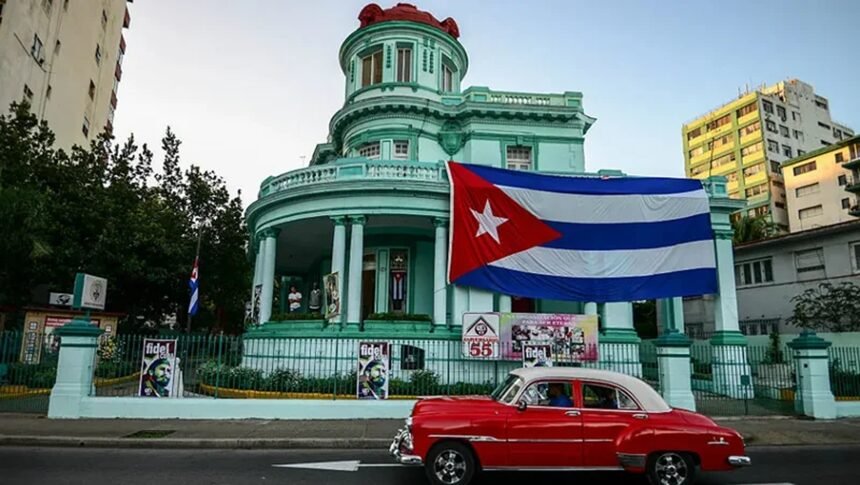
Under increasing U.S. pressure, the Cuban government has rejected accusations that it poses a threat to the security of the United States, emphasizing that it is ready for dialogue and cooperation with Washington.
On Monday, Cuba’s Ministry of Foreign Affairs issued a statement calling for dialogue and underlining that the country does not support “terrorism.” The reaction comes amid heightened tensions following the abduction of Venezuelan leader Nicolás Maduro last month, an event linked to U.S. President Donald Trump’s policy of asserting dominance over the Western Hemisphere.
“The Cuban people and the American people benefit from constructive engagement, lawful cooperation, and peaceful coexistence,” the official Havana statement said.
“Cuba reaffirms its willingness for respectful and reciprocal dialogue with the United States government, based on mutual interest and international law.”
The statement was released just hours after Trump announced that diplomatic contacts with Cuba have resumed, stating that his administration is communicating with the “highest levels” of the Cuban government.
“Cuba has been a failed state for a long time. Now Venezuela is no longer there to keep it afloat,” Trump told reporters.
Venezuela had been Cuba’s primary energy supplier, but following Maduro’s ousting by U.S. forces, oil supplies have been almost entirely cut off. The United States has also seized Venezuelan oil tankers in the Caribbean, a move critics have labeled as piracy.
Cuba had close economic and security ties with the Maduro government, and approximately 50 Cuban soldiers reportedly died during the operation to capture the Venezuelan leader. The Trump administration has also pressured Mexico to halt oil supplies to Cuba, raising concerns about a potential humanitarian crisis on the island.
U.S.-Cuba relations have been hostile since the communist revolution of 1959, which brought Fidel Castro to power. In 2021, during his first term, Trump placed Cuba on the list of “state sponsors of terrorism.”
Recently, the White House released a memorandum labeling the Cuban government as an “unusual and extraordinary threat” to the United States, accusing it of cooperating with “malicious actors” such as China and Russia.
These accusations were categorically denied by Cuban authorities, who emphasized that the country does not host foreign military or intelligence bases and does not support terrorist or extremist organizations.
Meanwhile, Trump has suggested that one of his administration’s key demands relates to the treatment of the Cuban-American community in the United States, a key Republican constituency in Florida. U.S. Secretary of State Marco Rubio also supports this hardline approach toward Latin America.
The situation has also drawn concern from the Vatican. Pope Leo expressed alarm at the escalation and urged the parties to engage in sincere dialogue to avoid further violence and suffering for the Cuban people.