Growing fears of immigration enforcement actions are prompting Native Americans across the United States to carry tribal identification documents to prove their U.S. citizenship, amid concerns that racial profiling by federal immigration agents could lead to wrongful detention.
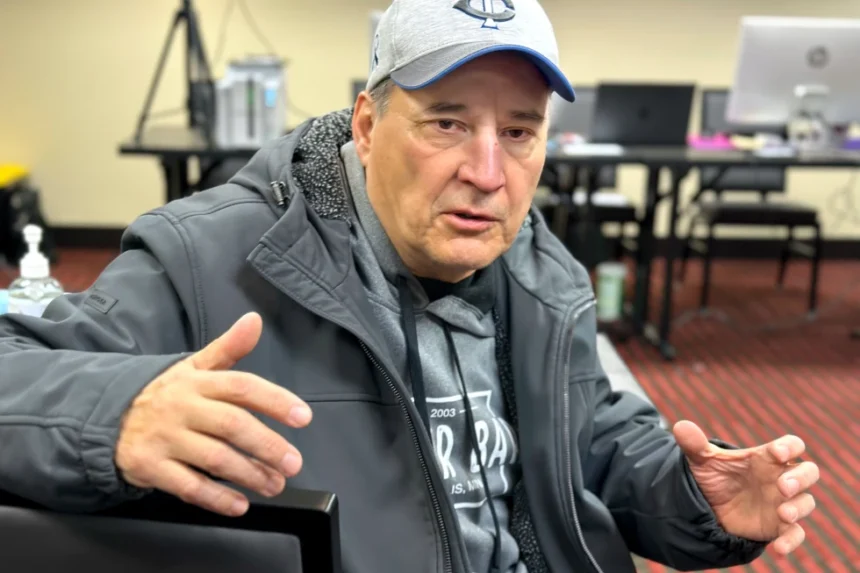
When U.S. Immigration and Customs Enforcement (ICE) launched what officials described as the largest immigration operation in history in Minneapolis, Shane Mantz, a citizen of the Choctaw Nation, retrieved his tribal citizenship card and began carrying it at all times. Mantz said he worries that his appearance could cause agents to mistake him for a non-citizen during ICE raids.
Similar concerns are being echoed nationwide. Dozens of the 575 federally recognized Native nations have accelerated the issuance of tribal IDs, waiving fees, lowering age requirements, and speeding up processing times to help members protect themselves.
According to David Wilkins, a scholar of Native governance at the University of Richmond, this marks an unprecedented moment.
“There’s nothing historically comparable,” Wilkins said. “It’s deeply troubling that Indigenous people feel compelled to prove their right to live in their own land.”
A Bitter Irony for Indigenous Communities
Legal advocates say the situation reflects a profound contradiction.
“As the first peoples of this land, Native Americans should never have their citizenship questioned,” said Jaqueline De León, senior attorney at the Native American Rights Fund.
The U.S. Department of Homeland Security (DHS) defended ICE’s actions, stating that agents are trained to determine citizenship status and that “reasonable suspicion” is used in enforcement decisions. In September, the U.S. Supreme Court permitted ICE to consider apparent race and ethnicity as factors when deciding whether to detain individuals.
Urban Native Communities on Edge
Approximately 70% of Native Americans now live in urban areas, including tens of thousands in Minneapolis–St. Paul. In early January, more than 3,400 arrests were reported in the city, with over 3,000 ICE and Border Patrol agents deployed.
In response, tribal representatives from at least 10 nations traveled to Minneapolis to help members apply for IDs. These included the Lac Courte Oreilles Band of Ojibwe, Sisseton Wahpeton Oyate, and Turtle Mountain Band of Chippewa.
“You just get nervous,” said Turtle Mountain citizen Faron Houle, who recently obtained IDs for himself and his children. “It feels like racial profiling.”
Reports of Detentions and Harassment
Several tribes have reported incidents involving ICE. The Oglala Sioux Tribe has banned ICE from its reservation, while the Standing Rock Sioux Tribe confirmed that a member was detained in Minnesota. Navajo leaders have also reported detentions in Arizona and New Mexico.
Navajo construction worker Peter Yazzie said he was arrested and held for several hours despite carrying official documents proving his citizenship.
“It makes you feel less human,” Yazzie said. “People look at your face and decide you don’t belong.”
DHS declined to comment on specific cases.
Identity, Safety, and Dignity
For many Native Americans, carrying tribal identification is no longer just about legal recognition—it has become a matter of personal safety.
“I’m proud of who I am,” said Christine Yellow Bird, a tribal administrator who traveled repeatedly to help urban members. “I never thought I’d need my ID to feel safe.”
Mantz, meanwhile, says securing documents for his children has become urgent.
“It gives some peace of mind,” he said. “But the question remains: why should we have to prove who we are?”