A Croatian investigative journalist and a Serbian human rights lawyer are conducting a joint legal and moral effort to expose war crimes committed against civilians in Sarajevo, including serious allegations related to the so-called “Sarajevo Safari”—the sniper killing of civilians allegedly carried out with organized political and logistical support.
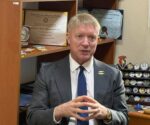
The issue was discussed by investigative journalist Domagoj Margetić and Serbian lawyer Čedomir Stojković on the program Plenum aired on Federal Television.
Origins of the “Sarajevo Safari” Investigation
Margetić stated that he began investigating the “Sarajevo Safari” as early as 1995, during his stay in Sarajevo. He said he worked closely with Nedžad Ugljen, former deputy director of the Agency for Investigation and Documentation, who had compiled files and testimonies related to the killing of civilians.
According to Margetić, Ugljen claimed that the organization of these crimes was conducted through the Serbian Radical Party (SRS) and its leading figures, including Vojislav Šešelj and Aleksandar Vučić, who at the time held a senior position within the party.
Following Ugljen’s assassination, Margetić alleges that key documents and evidence disappeared. He added that despite months of inquiries to Bosnian institutions, including SIPA, he has received no concrete responses.
Criminal Complaints and International Legal Efforts
Margetić revealed that he has submitted a detailed criminal complaint to the Milan Prosecutor’s Office, outlining:
- The logistical structure behind the crimes
- Names of suspects and witnesses
- Circumstances of civilian killings
- Alleged direct and organizational involvement of Aleksandar Vučić during the war
According to him, the Milan Prosecutor’s Office is actively working on the case, with the possibility of an indictment. However, he warned that cooperation from Bosnian institutions remains a critical and potentially obstructed element.
Margetić claims that Vučić’s public reactions show “extreme nervousness,” which he interprets as indicative of responsibility.
He also disclosed the existence of a document allegedly signed by Slavko Aleksić, a former Chetnik commander, granting free passage to Aleksandar Vučić in the Sarajevo and Romanija regions while escorting foreigners to the Jewish cemetery, a location central to the “human safari” allegations.
Margetić has been banned from entering Serbia since May 2023. Although a request for an Interpol arrest warrant was rejected, a domestic arrest warrant remains active in Serbia.
Stojković: Logistics Amount to War Crimes Complicity
Serbian lawyer Čedomir Stojković said his involvement stems from a personal confrontation with facts and a rejection of 1990s propaganda narratives.
He emphasized that under criminal law, logistical support—such as organizing transport and operational assistance—constitutes complicity and incitement to war crimes, equivalent to direct participation.
Stojković recalled that Aleksandar Vučić served as Secretary General of the Serbian Radical Party, a role that allegedly included full control over logistics, including the organization of buses transporting volunteers and foreigners to Sarajevo, as described in witness testimonies.
He confirmed that he has filed a criminal complaint with the War Crimes Prosecutor’s Office in Belgrade, calling for an investigation into the entire chain of responsibility, from organizers and financiers to collaborators.
“Without Confronting the Truth, There Is No Healing”
Stojković warned of the normalization of war crimes and institutional silence across the region.
He stressed that without an honest reckoning with past crimes, societies in the Balkans cannot heal.
Both Margetić and Stojković emphasized that their actions are driven by moral responsibility and conscience, calling for justice for Sarajevo’s civilians and the full exposure of crimes they believe are still being politically and institutionally concealed.