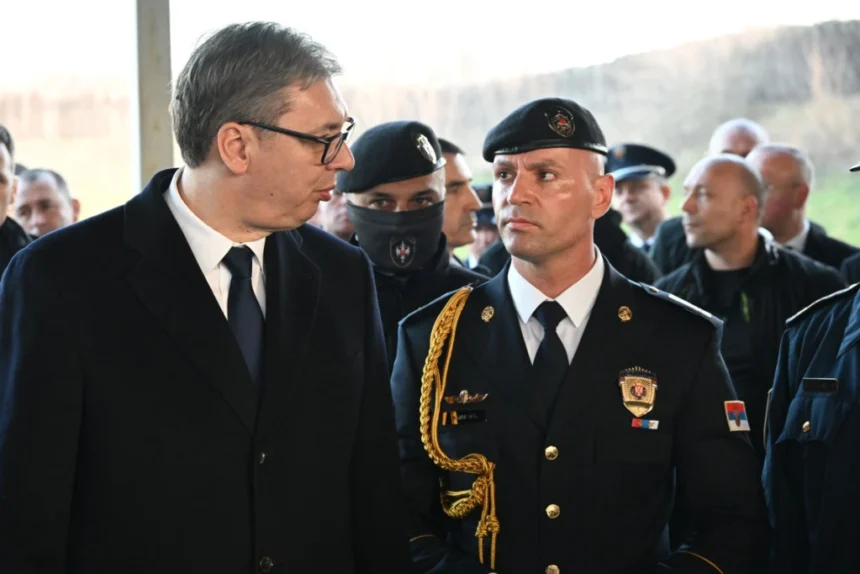
Recent reports reveal that the former Anti-Terror Group (ATG) within the Unit for Protection (JZO) has been used as a source of loyal personnel for Serbia’s key police units, including the Criminal Police Directorate (UKP), the Organized Crime Unit (SBPOK), and the Special Anti-Terrorist Unit (SAJ). Sources indicate that over 40 former ATG members have been reassigned to these units, often without proper training, experience, or security clearance, raising concerns about professionalism and internal discipline.
The appointment of Igor Žmirić as commander of SAJ, a former ATG and JSO member, has sparked controversy. Reports suggest that Žmirić failed a special security and polygraph test during a previous stint in SAJ, yet he now holds the unit’s top position. His leadership has reportedly led to purges within the unit, with several experienced officers, including war veterans, either forced into retirement or reassigned.
Similarly, Marko Kričak, head of UKP, and Marko Zafirović, head of SBPOK, are former ATG members, forming a network of officers closely aligned with the current government. Observers note that these appointments have enabled the government to exert control over elite police units and deploy them in politically sensitive operations, including high-risk arrests and protest suppression.
Concerns about corruption have also surfaced. Žmirić reportedly acquired a luxury villa in Avala, constructed by an individual with a criminal record, fueling further scrutiny over the politicization of the police. Critics argue that these developments have weakened the independence and operational integrity of Serbia’s most sensitive security units, while growing dissatisfaction within the police and escalating criminal incidents in Belgrade underscore the risks of turning elite units into instruments of political loyalty.
The restructuring of these forces reflects a broader trend of using former special units as reservoirs for loyalists, raising questions about accountability, the rule of law, and the future effectiveness of Serbia’s law enforcement institutions.