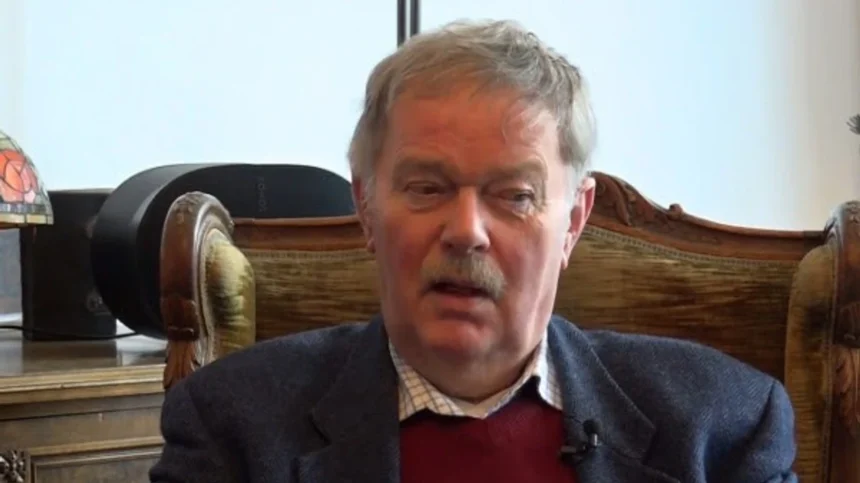
Former Dutch ambassador to Kosovo, Robert Bosch, has sharply criticized the prosecution’s case against former leaders of the Kosovo Liberation Army, arguing that there is insufficient evidence to justify the severe sentences requested by prosecutors at the Kosovo Specialist Chambers in The Hague.
Bosch Calls Sentencing Requests “Absurd”
Bosch described as “absurd” the prosecution’s demand for 45-year prison sentences against former Kosovo President Hashim Thaçi, along with Kadri Veseli, Rexhep Selimi, and Jakup Krasniqi. The four are facing war crimes and crimes against humanity charges linked to their alleged roles during the Kosovo conflict.
Speaking in an interview from The Hague, Bosch argued that the prosecution has failed to present convincing proof supporting claims that the accused orchestrated or were responsible for systematic crimes.
According to Bosch, the lengthy legal proceedings, which included numerous witness testimonies, have in several instances undermined the prosecution’s narrative rather than reinforced it.
Questions Raised Over Evidence and Prosecutorial Approach
The charges have been pursued by Chief Specialist Prosecutor Kimberly West, who has sought maximum penalties for the accused. Defense teams, however, insist that no credible evidence exists linking the defendants to the alleged crimes, calling for full acquittal.
Bosch expressed concern that the prosecution appeared to be focused on securing convictions regardless of evidentiary strength, raising broader questions about judicial impartiality and procedural fairness.
He further rejected claims that the Kosovo Liberation Army functioned as a criminal organization, emphasizing that Western institutions, including NATO, cooperated with the group during the 1999 conflict.
Bosch argued that labeling the organization as criminal would indirectly imply that NATO knowingly collaborated with criminal structures—an assertion he described as politically and historically contentious.
Expectations from the Judicial Panel
The trial panel, led by Judge Charles Smith, is expected to deliver an independent assessment of the evidence. Bosch stressed the importance of judicial neutrality, stating that the legitimacy of the court could be undermined if verdicts appear politically motivated rather than evidence-based.
He suggested that, based on publicly presented material, the prosecution’s case appears weak and may not meet the threshold required for convictions. Nevertheless, he warned that even acquittals could lead to extended legal battles, as prosecutors retain the right to appeal verdicts.
Political and Regional Reactions Intensify Debate
The case has sparked strong reactions across Kosovo and the broader region, with political leaders and public figures voicing concerns that the charges risk portraying the Kosovo Liberation Army as criminal rather than a liberation movement.
Bosch also criticized perceived inconsistencies in accountability across the region, referencing figures connected to the regime of former Serbian leader Slobodan Milošević. He argued that individuals such as Aleksandar Vučić and Ivica Dačić, who held influential positions during the 1990s, have not faced similar legal scrutiny.
Such comparisons, while controversial, highlight ongoing political sensitivities surrounding war accountability and transitional justice in the Balkans.
Public Mobilization and Broader Implications
Public demonstrations have been announced in Prishtina under the slogan “Justice, Not Politics,” reflecting widespread concern that the trial could influence Kosovo’s international image and internal political stability.
Bosch stated that peaceful protests are legitimate democratic tools, while warning that violent demonstrations could undermine public support and international credibility.
A Case With Long-Term Consequences
The trial, which began in April 2023, represents one of the most significant legal processes related to the Kosovo conflict. The defendants have been held in detention in The Hague since the confirmation of the indictment, and the final verdict could have far-reaching consequences for regional reconciliation, international justice, and Kosovo’s political landscape.
While Bosch’s comments reinforce criticism of the prosecution, they also illustrate the deeply polarized perspectives surrounding the case, with legal experts divided over whether the evidence presented meets international criminal law standards.
The final outcome will likely shape not only the legacy of the accused but also the credibility of international war crimes prosecutions in post-conflict societies.