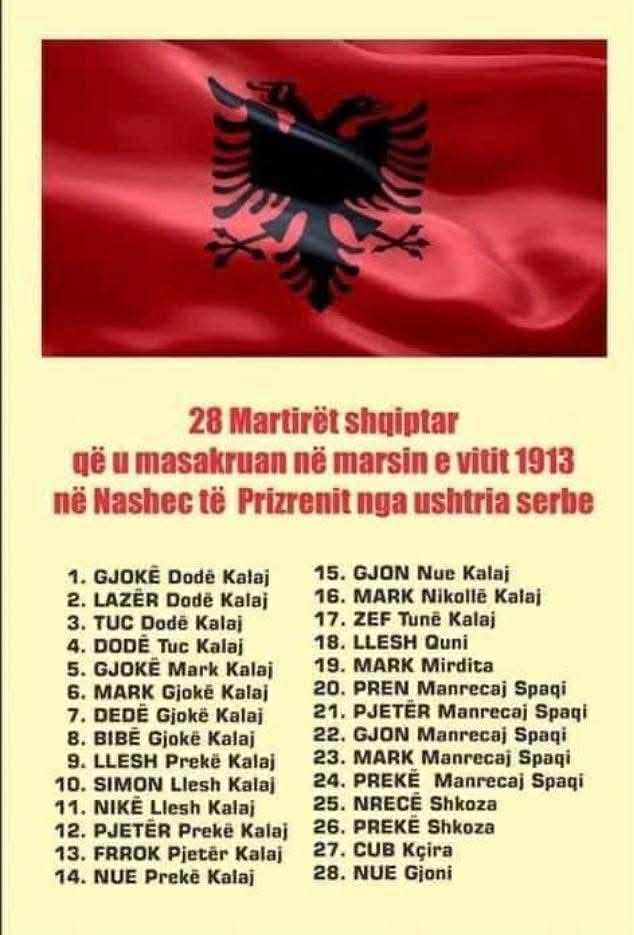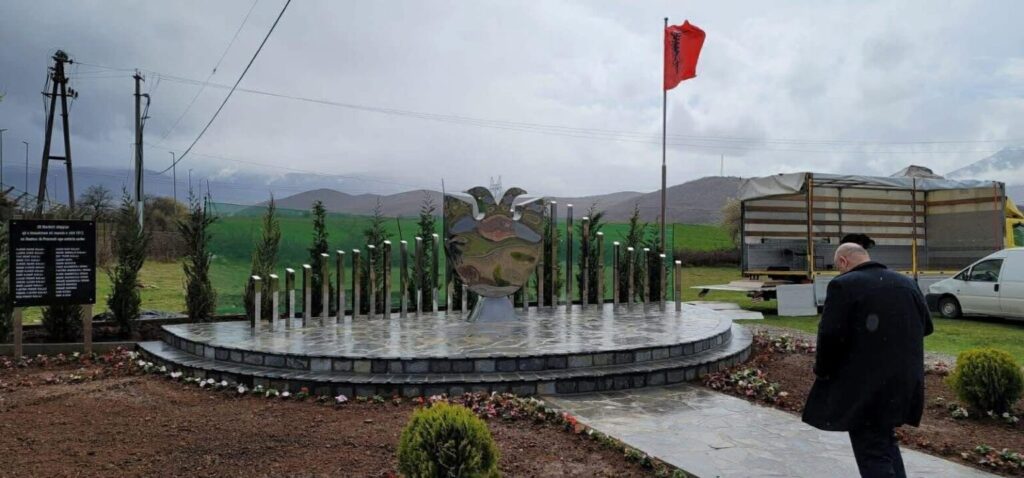
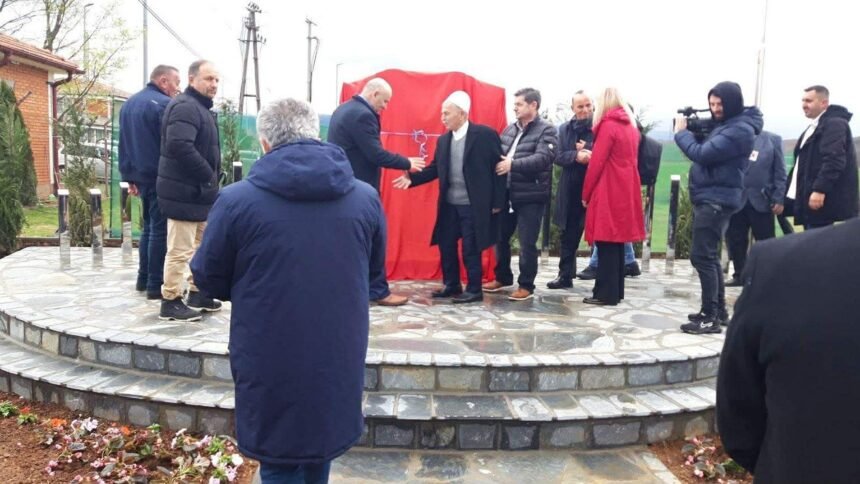
Four years ago, with grief, dedication, and dignity, the families of the victims erected a memorial in honor of 28 martyrs killed by Serbian forces in March 1913—an act long overdue, yet essential for historical memory and national conscience.
This memorial is not merely a stone structure. It stands as testimony to a grave crime, a symbol of sacrifice, and a lasting call to never forget. It was built through the contribution of the Shoqata Trojet e Arbërit, with the support of activist Nue Oroshi, as an effort to give voice to those who were unjustly silenced.
However, beyond the dedication of families and those preserving memory, a troubling reality remains—the lack of institutional attention. Since its unveiling, the memorial has largely remained outside the focus of those who bear the responsibility to honor history.
At the inauguration ceremony, despite invitations being sent, institutional participation was nearly absent. Only Anton Quni attended, for which the families have expressed gratitude. Four years later, the situation remains unchanged—a silence that weighs heavily on collective memory.
The martyrs of 1913 are not merely a chapter of the past. They are part of national identity, a testament to sacrifice that demands continuous respect, not occasional remembrance.
On this anniversary, the message from the families is clear: memory cannot be left in the hands of a few. It is a shared responsibility—especially of institutions that carry a moral and historical obligation to stand by such symbols.
A nation that does not honor its fallen risks losing the very meaning of its history.